
In This Article
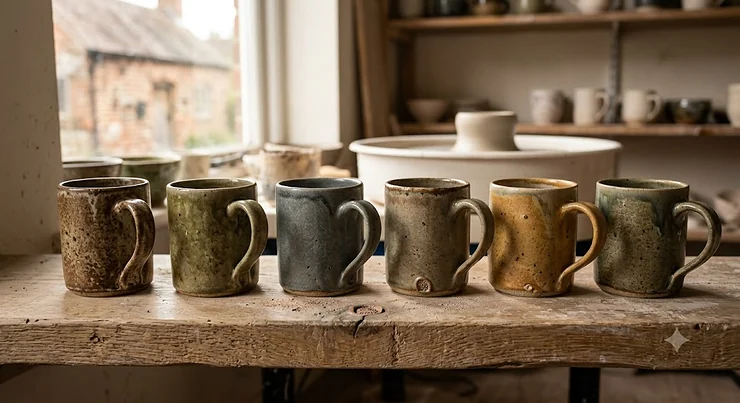
There’s a particular kind of disappointment reserved for the mug that’s gone thin and see-through at the rim after eighteen months of dishwasher cycles. If you’ve ever cradled a hot brew in something that felt more like a wine glass than a proper cup, you already understand why so many of us are hunting for the best stoneware mugs rather than settling for whatever came free with a supermarket meal deal. Stoneware is the workhorse of the pottery world — dense, chip-resistant, and fired hot enough that it simply doesn’t crack under a splash of boiling water the way flimsier ceramics do.

What is a stoneware mug? In short, it’s a drinking vessel made from stoneware clay fired at high temperatures (typically 1,200–1,300°C), producing a non-porous, exceptionally durable body that holds heat well and resists chipping better than earthenware or bone china.
This guide walks through seven genuinely good stoneware mugs available in the UK, spanning budget everyday sets through to handmade artisan pottery, and unpacks the practical stuff nobody tells you on the product page — how they actually perform, who they suit, and where your money is best spent. We’ll cover rustic stoneware mugs, large-capacity options for serious tea drinkers, matte glaze finishes, and the earthy aesthetic that’s taken over kitchen shelves across the country. Whether you want a set for the whole household or a single hand-thrown piece worth savouring, there’s a sensible pick ahead.
Quick Comparison Table
| Mug | Capacity | Style | Best For |
|---|---|---|---|
| Amazon Basics Glazed Stoneware Mugs | 473ml | Simple, glossy glaze | Everyday budget sets |
| Mason Cash Classic Collection | 450ml | Heritage embossed | Traditional British kitchens |
| vancasso Bonita Large Mugs | 500ml | Reactive glaze, bold colour | Large-capacity tea and coffee |
| Denby Halo Mug Set | 400–420ml | Speckled reactive glaze | Premium everyday gifting |
| Mason Cash Impressions | 350ml | Textured screen-print, matte-leaning | Rustic, understated kitchens |
| Nicola Spring Dipped Dash | 475ml | Hand-dipped, earthy tones | Rustic-country aesthetic |
| John Julian Simple Mug | ~300ml | Hand-thrown, artisan | Handmade, one-of-a-kind pieces |
Looking at the spread above, the gap between a mass-produced budget set and a hand-thrown artisan mug isn’t really about function — all seven will happily hold your tea. Where they diverge is in tactile character, glaze uniqueness, and how much the mug itself becomes part of the ritual rather than just a container. Buyers prioritising capacity should note the vancasso Bonita and Nicola Spring options both comfortably clear 470ml, while anyone chasing that hand-finished, no-two-alike look will want to look toward the Denby Halo or John Julian pieces.
💬 Already spotted your favourite? Scroll down to compare the full breakdown below — help others make a better brew-time decision too!
Top 7 Stoneware Mugs: Expert Analysis
1. Amazon Basics Glazed Stoneware Coffee Mugs — best no-nonsense budget set
The Amazon Basics 6-piece set is about as sensible as stoneware gets: no frills, no pattern to chip away over time, just a solid glazed mug in a neutral linen-grey tone. At 473ml, it sits on the generous side of “normal”, which matters more than it sounds — a mug that’s genuinely too small is one of the most common regrets buyers report after ordering online. The glazed stoneware body is microwave and dishwasher safe, and the straightforward glossy finish means there’s minimal decorative detail to wear thin with repeated washing, unlike printed or transfer-decorated mugs. On paper, this is the set to buy when you need six matching mugs for a shared kitchen, office, or student house and don’t want to think too hard about it. Based on the spec comparison with other budget stoneware sets in this bracket, the 473ml capacity and six-piece count make the per-mug value difficult to beat, though buyers wanting individual character or a decorative glaze should look further down this list. Because Amazon Basics doesn’t publish the kind of dedicated third-party review breakdowns available for branded stoneware, we can’t respectably summarise “aggregated review sentiment” here in the way we can for other picks — what we can say honestly is that Amazon Basics kitchenware as a range typically scores well for reliability at this price point, and buyers should read current listing reviews before committing.
Pros:
✅ Generous 473ml capacity for the price
✅ Simple glaze with nothing to chip or fade
✅ Six mugs cover most households in one order
Cons:
❌ Little decorative character or aesthetic personality
❌ No verified aggregated review data available at time of research
Prices for this set typically sit around £15–£20, making it one of the most cost-effective ways to kit out a kitchen with proper stoneware rather than thin-walled ceramic.
2. Mason Cash Classic Collection — best heritage British brand pick
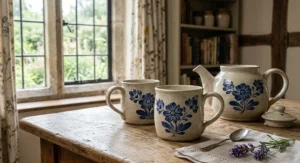
Mason Cash has been supplying British kitchens with kitchenware since 1901, and the Classic Collection set of four cream stoneware mugs leans into that heritage with a soft, embossed finish that photographs beautifully against a farmhouse worktop. Made from fine stoneware, these hold roughly 450ml and are dishwasher, microwave, and freezer safe, which in practice means they can go from fridge-cold overnight oats to microwave reheat without a second thought. What most buyers overlook about heritage stoneware brands like this one is that the name alone doesn’t guarantee zero manufacturing variance — Mason Cash’s own product line spans everything from bakeware to pet bowls, and quality control on any single glazed run can vary slightly, which is worth bearing in mind rather than assuming heritage equals flawless. This mug suits anyone furnishing a traditional-style kitchen who wants matching mugs, bowls, and mixing bowls from the same recognisable range, and it’s a popular wedding or housewarming gift for exactly that reason. Reviewers consistently report that the mugs feel sturdy and look attractive on open shelving, with several noting they coordinate well with other Mason Cash pieces already in the cupboard; a smaller number of reviews mention chipped items on arrival, which appears more tied to courier handling than the stoneware itself given how frequently breakage complaints reference delivery packaging specifically.
Pros:
✅ Recognisable 120+ year old British kitchenware heritage
✅ Coordinates with wider Mason Cash bakeware range
✅ Oven, freezer, microwave and dishwasher safe
Cons:
❌ Some reviewers report chipped pieces on delivery
❌ Embossed finish shows wear faster than plain glaze
Expect to pay in the £20–£30 range for the set of four; on a cost-per-mug basis it sits mid-table, which feels fair given the brand recognition and matching range it plugs into.
3. vancasso Bonita Large Mugs, Set of 6 — best for large-capacity coffee drinkers
If your first coffee of the day disappears before you’ve finished reading the headlines, the vancasso Bonita set solves that specific problem with a genuinely large 500ml capacity per mug — noticeably more than the 300–350ml you’ll find on most supermarket shelves. The reactive glaze finish means each mug in the set has subtle colour variation, giving a warm, ombre-style gradient rather than a flat single-tone glaze, and the stoneware body is finished to resist the lead and cadmium leaching that cheaper imported ceramics sometimes fail to control for. Based on the spec comparison with the rest of this list, this is the clearest “best stoneware coffee mugs large” pick here: only the Nicola Spring set comes close on volume, and neither the Amazon Basics nor Mason Cash options reach 500ml. This suits big-mug loyalists, anyone who wants to halve their trips back to the kettle, and households who like a bit of colour variation across a matching set rather than uniform mugs. Aggregated reviewer sentiment on vancasso’s wider tableware ranges is broadly positive regarding size and visual appeal, though a smaller number of buyers — including reviews of vancasso’s dinnerware combination sets — have flagged inconsistency between pieces bought at different times, suggesting batch-to-batch colour variation is worth expecting rather than treating as a fault.
Pros:
✅ Genuinely large 500ml capacity per mug
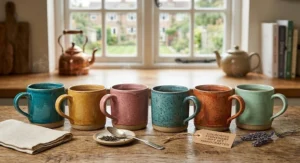
✅ Reactive glaze gives each mug subtle individual colour
✅ Non-toxic, lead-free and cadmium-free stated glaze
Cons:
❌ Batch colour variation reported between separate orders
❌ Large size won’t suit smaller cupboards or mug trees
Typical pricing sits around £25–£35 for the set of six, which works out sensible per-mug given the oversized capacity — genuinely good value if you actually drink that much tea.
4. Denby Halo Stoneware Mug Set — best premium speckled glaze
Denby has been hand-decorating stoneware at its Derbyshire factory for generations, and the Halo range is its most distinctive drinkware line: two reactive glazes combine during firing to create a genuinely unique speckled finish, meaning no two mugs in a set are ever quite identical. Each mug holds around 400–420ml, comfortably above standard, and the resilient glaze is designed specifically to withstand daily kitchen use without the surface degrading the way cheaper printed finishes can. What the spec sheet won’t tell you, but reviewers note, is that the “no two pieces the same” character is a genuine selling point rather than marketing spin — buyers frequently mention the speckle pattern as the reason they chose Denby over a flatter, single-tone alternative. This is the pick for anyone treating mug-buying as a small design decision rather than a pure function purchase: gift-buyers, people upgrading a tired mug cupboard, or those who want something that still reads as “quality” a decade from now. Reviewers consistently praise the set as good value for a genuinely high-quality product and cite it as a well-received gift for a loved one; sentiment across Denby’s wider stoneware mug listings is strongly positive, though a handful of buyers on premium multi-piece Denby sets flag inconsistent stock availability rather than any fault with the mugs themselves.
Pros:
✅ Unique reactive-glaze speckle, no two mugs identical
✅ Handcrafted in England at Denby’s Derbyshire pottery
✅ Oven, freezer, microwave and dishwasher safe
Cons:
❌ Premium price relative to mass-produced alternatives
❌ Stock and colourway availability fluctuates
A two-mug Denby Halo set typically falls in the £30–£45 range depending on colourway and retailer stock, positioning it as the clear “treat yourself” option on this list rather than an everyday bulk buy.
5. Mason Cash Impressions — best textured matte-leaning finish
Where the Classic Collection leans traditional, the Impressions range goes textural: a double reactive screen-print glaze gives these 350ml mugs a tactile, slightly matte-leaning surface that catches the light differently to a standard glossy glaze. The organic stoneware body is chip-resistant and holds heat effectively, and the muted charcoal and grey colourways lean into the understated, earthy palette that’s dominated kitchen styling for the past few seasons. Here’s what to weigh up: a textured, less-glossy glaze genuinely shows fingerprints and water spots more readily than a high-gloss finish, so if you’re fussy about a spotless-looking mug straight out of the dishwasher, this isn’t the pick — but if you like the tactile, slightly rustic hand-feel of a matte surface against your palm each morning, it’s exactly the point. This suits buyers actively hunting a matte glaze finish rather than the shiny stoneware that dominates supermarket shelves, and pairs well with darker, moodier kitchen colour schemes. Reviewers who’ve bought into the wider Mason Cash Impressions and Reactive ranges generally describe the mugs as stylish and a step up visually from plain glazed stoneware, with the double-glaze effect frequently singled out as the standout feature; as with other Mason Cash lines, a minority of reviews mention breakages that appear delivery-related.
Pros:
✅ Tactile matte-leaning double reactive glaze
✅ Suits darker, earthy kitchen colour schemes
✅ Chip-resistant organic stoneware construction
Cons:
❌ Matte-leaning surface shows fingerprints more easily
❌ Smaller 350ml capacity than large-format rivals
Expect to pay somewhere in the £15–£25 range for a pack of two to four depending on retailer bundle, sitting comfortably in the mid-budget tier for a genuinely distinctive glaze finish.

6. Nicola Spring Dipped Dash Stoneware Mugs — best rustic dipped glaze for an earthy aesthetic
Nicola Spring built its reputation on hand-dipped glaze techniques, and the Dipped Dash range applies that directly to stoneware mugs: a bold base colour dipped partway up the mug, finished with a delicate dash-pattern decoration, at a generous 475ml capacity. The dipped-glaze method leaves a visible, slightly imperfect colour transition line on each mug — genuinely part of the design rather than a flaw — which is precisely what gives this range its rustic, farmhouse-country character. On paper, the combination of large capacity and an intentionally handcrafted-looking finish makes this one of the strongest picks here for anyone chasing that earthy aesthetic without paying artisan-pottery prices; the dipped technique nods to genuine craft processes even on a manufactured line. This suits buyers who want their mug shelf to look curated rather than uniform, and works particularly well mixed with wooden kitchenware, linen tea towels, and the wider “cottagecore” styling trend that’s shown no sign of slowing. Reviewers consistently mention the quality of the finish and packaging, describing the mugs as excellent quality with superb protective packing on arrival — a detail worth noting given how frequently stoneware breakage in transit comes up elsewhere in this list.
Pros:
✅ Large 475ml capacity, one of the biggest here
✅ Hand-dipped glaze gives genuine rustic character
✅ Strong reviewer feedback on packaging and finish quality
Cons:
❌ Dipped colour transition varies mug to mug
❌ Design won’t suit a minimalist, uniform mug set
Pricing typically runs £25–£35 for a set of six, which is competitive given both the capacity and the hand-finished glaze technique involved.
7. John Julian Simple Stoneware Mug — best handmade artisan pottery pick
For anyone who wants the real thing rather than a manufactured approximation of “handmade”, John Julian is a genuine UK studio pottery, hand-throwing stoneware at its workshop in Salisbury, Wiltshire. Each Simple Mug is individually thrown to be cupped comfortably in two hands, and because every piece passes through a human hand rather than a mould, there’s natural, expected variation in size, glaze pooling, and finish from mug to mug — the studio itself frames this as character rather than inconsistency, and honestly, that’s the correct way to think about buying artisan pottery generally. Based on the spec comparison with the six manufactured mugs above, this is the only genuinely hand-thrown, small-batch piece on the list, and it sits apart from the rest in both price and purpose: nobody buys a hand-thrown mug purely for capacity efficiency. This suits buyers who specifically searched for handmade stoneware mugs or artisan pottery rather than a matching six-piece set, gift-givers wanting something with a story behind it, and anyone building a deliberately mismatched, individually-collected mug shelf. Worth noting honestly: small studio potters like this typically sell direct through their own websites and small-business marketplace storefronts rather than mainstream retail listings, so availability and stock can be far more limited than the mass-produced options above — check current stock directly with the maker or via Amazon’s small-business storefront before assuming next-day delivery.
Pros:
✅ Genuinely hand-thrown by a working UK studio potter
✅ No two mugs are ever truly identical
✅ Supports small-scale British craft production
Cons:
❌ Limited stock and slower turnaround than mass production
❌ Premium price for a single mug versus a boxed set
Individual hand-thrown mugs like this typically sit in the £20–£30 range per piece — a genuinely different price bracket to the rest of this list, but one that buys craftsmanship rather than uniformity.
How to Care for and Season Your Stoneware Mugs
Stoneware doesn’t need seasoning the way cast iron does, but there’s a genuine first-30-days routine worth following to keep any of the mugs above looking sharp for years rather than months. Start by hand-washing new stoneware once or twice before its first dishwasher cycle — this settles the glaze and lets you spot any hairline crazing (fine surface cracks in the glaze, which are cosmetic rather than dangerous but worth knowing about early) before it’s baked in by repeated hot cycles. Avoid sudden temperature swings: pulling a mug straight from the freezer into a hot microwave, or rinsing a just-boiled mug under cold water, is the single most common cause of thermal shock cracking, even in genuinely oven-safe stoneware. When it comes to ongoing maintenance, stack mugs loosely rather than nesting them tightly rim-to-base, since repeated contact at the same pressure point is where most chipping actually starts — not from dropping, as most people assume. A common mistake in the first month of ownership is over-relying on the dishwasher’s heated-dry cycle, which accelerates glaze wear on decorative or matte-finished pieces like the Mason Cash Impressions range; air-drying or a quick towel-dry preserves texture and colour noticeably longer. If a mug does develop a small chip, retire it from hot-drink duty and repurpose it as a pen pot or plant holder rather than continuing to drink from a compromised glaze surface, since a chip exposes unglazed stoneware that can absorb moisture and stain over time.
✨ Ready to build your ideal mug shelf? Check current prices and availability on the picks above before they sell out!
Real-World Scenarios: Which Stoneware Mug Matches Your Lifestyle?
Picture three fairly typical buyers. First, a university student sharing a kitchen with four flatmates who needs mugs that survive careless stacking, occasional borrowing, and a dishwasher run every few days — the Amazon Basics set is the obvious answer here: cheap enough that a chip doesn’t sting, and generous enough at 473ml that nobody’s refilling constantly between lectures. Second, someone furnishing their first proper home who wants their kitchen to look intentional on a modest budget — the Nicola Spring Dipped Dash range or Mason Cash Classic Collection both deliver a coordinated, farmhouse-leaning look without artisan pricing, and both work well as a full six-mug set that photographs nicely for the inevitable house-warming post. Third, a coffee obsessive working from home who goes through three mugs’ worth of flat white before lunch and genuinely cares about the tactile experience of drinking from something well-made — this is where the vancasso Bonita’s 500ml capacity or the John Julian hand-thrown piece earn their keep, since both prioritise either volume or craft character over anything else. None of these profiles are mutually exclusive, and most households end up owning a mix — a robust everyday set for the cupboard, plus one or two “good” mugs reserved for a proper sit-down cup of tea.
How to Choose the Best Stoneware Mugs
Choosing well comes down to weighing a handful of practical factors against how you actually drink tea or coffee day to day. Here’s the framework worth working through before you buy:
- Capacity first. Decide honestly whether you’re a 250ml sipper or a 450ml-plus gulper — buying a set that’s too small is the single most common regret in mug reviews across every brand covered here.
- Glaze finish. Glossy glazes show fewer fingerprints and clean up faster; matte and reactive glazes look more distinctive but need gentler drying to stay sharp.
- Handle shape and size. A mug that looks great in photos but doesn’t comfortably fit larger hands gets relegated to the back of the cupboard fast — check dimensions where listed.
- Set size versus individual pieces. A matching six-piece set suits a shared household; individually collected or hand-thrown mugs suit someone building character over uniformity.
- Oven, freezer and dishwasher ratings. Not every stoneware mug is rated for all four appliances — check the specific listing rather than assuming “stoneware” automatically means “oven-safe”.
- Brand heritage versus manufactured origin. Heritage names like Denby and Mason Cash carry recognisable quality control; smaller studio potters like John Julian offer genuine one-off character instead.
- Budget realism. Set a per-mug budget before browsing — anywhere from roughly £3 per mug in a budget set up to £25-plus for a single hand-thrown piece is entirely normal, so know which bracket you’re actually shopping in.
Stoneware Mugs vs Porcelain and Bone China: What’s the Real Difference?
The core distinction comes down to firing temperature and clay body. Stoneware is fired at roughly 1,200–1,300°C, producing a thick, dense, non-porous body that’s naturally chip-resistant and holds heat well — which is exactly why it dominates everyday kitchenware. Porcelain and bone china, by contrast, are fired using finer clays (bone china includes actual bone ash) at similarly high temperatures but produce a thinner, more translucent, more delicate result that looks elegant but chips and cracks far more readily under everyday knocks. According to Wikipedia’s overview of the Staffordshire Potteries, the historic centre of English ceramics production made earthenware, stoneware and porcelain in large quantities side by side, and all three materials still coexist on shop shelves today for genuinely different reasons rather than one simply being “better”.
| Factor | Stoneware | Porcelain / Bone China |
|---|---|---|
| Durability | High — chip and crack resistant | Lower — more fragile |
| Weight | Heavier, substantial feel | Lighter, delicate feel |
| Heat retention | Very good | Moderate |
| Typical use | Everyday, family kitchens | Formal occasions, gifting |
| Price range | Budget to premium artisan | Mid to high-end |
In practice, this table makes the decision straightforward: if a mug needs to survive daily use, a dishwasher, and the occasional careless knock against the sink, stoneware wins on durability alone. Porcelain and bone china still have their place for a formal afternoon tea set, but as an everyday workhorse, none of the seven mugs above would be improved by swapping the material.
Common Mistakes When Buying Stoneware Mugs
The most common misstep is buying purely on colour or pattern without checking capacity, which is how so many people end up with a “gorgeous” 220ml mug that needs refilling twice before their coffee’s finished. A close second is assuming every stoneware mug is automatically microwave and dishwasher safe simply because the material is stoneware — glaze composition and any metallic decorative trim can rule this out on specific pieces, so it’s always worth checking the individual listing rather than the material description alone. Buyers also frequently underestimate how much a textured or matte glaze changes daily cleaning: a highly tactile finish like the Mason Cash Impressions range needs gentler drying than a plain glossy mug, and skipping that detail leads to disappointment within a few months. Another recurring error is treating “handmade” as a marketing word rather than checking whether a listing genuinely comes from a named studio potter — manufactured mugs finished to look artisanal (reactive or dipped glazes, for instance) are a perfectly valid, more affordable choice, but they’re not the same product as a piece from a working potter like John Julian, and buyers who specifically want the latter should read listings carefully. Finally, ignoring stated glaze safety information is a genuine oversight rather than a minor detail, particularly on imported budget stoneware, which is exactly why UK food-contact regulations exist in the first place — more on that below.
Are Stoneware Mugs Microwave Safe?
Most stoneware mugs are microwave safe, but “most” isn’t “all”, and this is worth checking on every individual listing rather than assuming based on material alone. Plain glazed stoneware without metallic trim, gold rims, or certain decorative lustre finishes is generally fine in a microwave, and every mug featured in this guide is stated as microwave safe by its manufacturer. The risk comes specifically from metallic decoration — gold or silver banding, foil-style transfers, or certain vintage glazes — which can spark and damage both the mug and the microwave. A second, less obvious factor is the mug’s wall thickness: genuinely dense stoneware heats more evenly than thin, hollow-walled ceramic, which is part of why proper stoneware performs noticeably better for reheating a half-finished cup than a flimsier printed mug does. If a listing doesn’t explicitly state microwave safety, the safest approach is a short test — thirty seconds on low power, checking the mug isn’t unusually hot to the touch or showing any sparking — before making it a daily habit.
Rustic Charm and the Earthy Aesthetic: Styling Your Stoneware Mugs
The rustic stoneware mug trend isn’t just a passing kitchen fad — it’s a genuine reaction against the ultra-glossy, uniform ceramics that dominated shelves for the past couple of decades. An earthy aesthetic leans on muted, natural tones (terracotta, sage, oatmeal, charcoal) and visible texture or glaze variation rather than flat, factory-perfect colour, and stoneware is naturally suited to this look because the clay body itself photographs and feels more grounded than fine porcelain ever could. Of the seven mugs covered here, the Nicola Spring Dipped Dash and Mason Cash Impressions ranges lean most directly into that rustic, earthy territory through their dipped and reactive glaze techniques, while the John Julian hand-thrown mug delivers the aesthetic at its most authentic, unfiltered level. Styling-wise, mismatched-but-coordinated mugs (same rough tone family, different individual glaze variation) tend to look more deliberate on open shelving than an identical uniform set, which is worth bearing in mind if you’re building a kitchen around this look rather than simply replacing broken mugs. A cluster of three or four rustic stoneware mugs on a wooden shelf, alongside a linen tea towel and a simple wooden board, is the easiest way to lean into the look without a full kitchen renovation.
Handmade Stoneware Mugs and Artisan Pottery: Why Small-Batch Matters
There’s a meaningful difference between a mug that’s manufactured to look handmade and one that genuinely is, and it’s worth understanding before you pay artisan pricing. Genuine handmade stoneware mugs, like those from John Julian’s Salisbury workshop, are individually thrown on a potter’s wheel, meaning wall thickness, glaze pooling, and even the exact capacity vary piece to piece — deliberately, not as a flaw. Artisan pottery in this genuine sense typically costs more per mug than a manufactured set for straightforward reasons: it’s slower to produce, each piece receives individual attention through every stage of throwing, trimming, glazing and firing, and small studios simply can’t achieve the economies of scale that larger manufacturers rely on. That said, several manufactured options on this list — the Denby Halo range in particular, still hand-decorated at its Derbyshire factory — sit in a genuine middle ground: not individually wheel-thrown, but still involving meaningful hand-finishing rather than pure automation. For buyers specifically drawn to supporting small UK studio potters, it’s worth searching directly for named makers rather than generic “handmade-style” listings, and checking whether a seller is a genuine small business or a larger operation using “handmade” as a stylistic descriptor rather than a literal claim.
Matte Glaze vs Glossy Glaze: Which Finish Should You Choose?
Glaze finish affects far more than looks — it changes how a mug feels in the hand, how it photographs, and even how it cleans up. Glossy glazes reflect light, show fewer fingerprints day to day, and are generally the most forgiving finish for a busy household dishwasher routine. Matte glaze, by contrast, has a soft, chalky, tactile surface that many buyers find genuinely more pleasant to drink from — there’s a reason the trend has stuck around rather than faded — but it does show water spots, oil from hands, and light scuffing more visibly over time, and it typically benefits from air-drying rather than a heated dishwasher cycle. Of the mugs featured here, the Mason Cash Impressions range leans furthest into a textured, matte-adjacent finish, while the Amazon Basics and vancasso Bonita sets sit toward the glossier end of the spectrum. Neither finish is objectively better; it genuinely comes down to whether you prioritise low-maintenance shine or a more tactile, characterful surface for your morning cup.
Long-Term Cost & Maintenance: Total Cost of Ownership
It’s tempting to judge stoneware purely on the upfront price, but total cost of ownership tells a more useful story. A £15 budget set that needs replacing every eighteen months because two mugs have chipped works out more expensive over five years than a £35 set that lasts the full stretch without a single casualty — assuming, of course, the more expensive set actually delivers on durability, which is why the pros and cons above matter more than price alone. Genuine stoneware, properly cared for using the guidance earlier in this article, should comfortably last five to ten years of regular use without needing replacement, making even the premium Denby Halo or John Julian picks reasonable value when amortised across that lifespan. Maintenance costs are effectively zero beyond normal washing-up liquid and the occasional gentle scrub for tea or coffee staining — baking soda paste handles most staining without needing specialist ceramic cleaner. The one ongoing cost worth budgeting for honestly is breakage from drops or knocks, which no amount of glaze quality fully prevents; buying a set of six rather than a pair means one casualty doesn’t leave you short a full round of mugs for guests.
Safety, Regulations and Food-Contact Compliance for UK Buyers
Ceramic mugs sold in the UK are subject to specific food-contact safety rules covering exactly the concern most people never think to check: how much lead and cadmium can leach from the glaze into a hot drink. Under the Ceramic Articles in Contact with Food Regulations, ceramic articles must not exceed set limits on the amount of lead and cadmium transferred from the article, with compliance determined through testing and certification. In practice, this means any stoneware mug sold legally through a UK retailer — including every option covered in this guide — has to meet those transfer limits, which is genuinely reassuring given how much scrutiny imported budget ceramics sometimes attract online. It’s still sensible due diligence, particularly with very cheap imported stoneware from unfamiliar sellers, to check that a listing states lead-free and cadmium-free glaze explicitly, as several brands featured here do. For genuinely handmade pottery from small UK studios, the same underlying regulations apply, though enforcement relies more heavily on the individual potter’s own testing and declared compliance rather than the large-scale certification processes bigger manufacturers use — worth bearing in mind, though not a reason to avoid supporting small studio potters altogether.
Benefits of Stoneware vs Traditional Alternatives
| Material | Chip Resistance | Heat Retention | Typical Lifespan | Best For |
|---|---|---|---|---|
| Stoneware | High | Very good | 5–10+ years | Everyday use, gifting |
| Earthenware | Low–moderate | Moderate | 2–4 years | Decorative, light use |
| Bone China | Low | Moderate | Variable, fragile | Formal occasions |
| Melamine/Plastic | Very high | Poor | Long, but degrades | Camping, children |
This comparison makes the case for stoneware fairly plainly: it sits in the genuine sweet spot between the fragility of earthenware and bone china and the heat-retention compromises of unbreakable plastic alternatives. For anyone weighing up whether stoneware is worth the slightly higher upfront cost over cheap earthenware mugs, the answer generally comes down to how often the mug gets used — daily-use kitchens see that investment pay back within the first year or two through reduced breakage alone.
Frequently Asked Questions
❓ Are stoneware mugs better than ceramic mugs?
❓ Can stoneware mugs go in the oven?
❓ Why are handmade stoneware mugs more expensive?
❓ How do I stop my stoneware mug from staining?
❓ What's the difference between rustic and matte stoneware mugs?
Conclusion
Picking the right stoneware mug really comes down to being honest about how you actually drink tea or coffee, rather than being swayed purely by a nice-looking glaze in a thumbnail photo. If you need volume without fuss, the Amazon Basics set or vancasso Bonita’s oversized capacity solve that cleanly. If you want a recognisable British heritage brand that’ll coordinate with wider kitchenware, Mason Cash and Denby both deliver on that front from different price brackets. And if what you’re really after is a piece with genuine character — something hand-finished rather than mass-produced — the Nicola Spring dipped glaze, Mason Cash Impressions texture, or the fully hand-thrown John Julian mug each offer a different level of that same earthy, artisan appeal. None of these seven are the “wrong” choice; they simply suit different mornings, different kitchens, and different budgets. What matters most is capacity, glaze finish, and genuine durability rather than marketing language, and every option covered here delivers honestly on at least one of those fronts.
✨ Don’t Miss These Exclusive Deals!
🔍 Take your morning brew to the next level with the stoneware mugs covered above. Click through to check current pricing and availability, and find the pick that’ll actually earn a permanent spot on your mug shelf.
Recommended for You
- Stoneware vs Ceramic Mugs 2026: 7 Picks That Actually Last
- Bone China vs Porcelain Mugs 2026: 7 Picks That Won’t Let You Down
- 7 Best Bone China Mugs UK 2026: Elegant Tea & Coffee Cups
Disclaimer: This article contains affiliate links. As an Amazon Associate, I earn from qualifying purchases. If you purchase products through these links, we may earn a small commission at no additional cost to you.
✨ Found this helpful? Share it with your friends! 💬🤗
