
In This Article
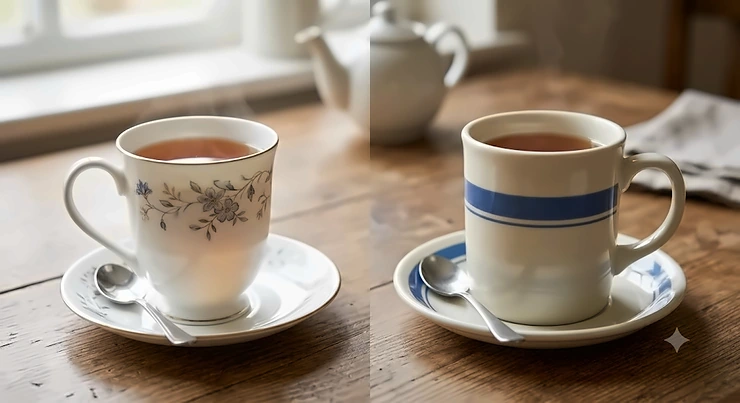
Pick up two mugs that look almost identical, hold them to the kitchen window, and one will glow faintly amber while the other stays resolutely, stubbornly opaque. That little party trick is, in essence, the whole bone china vs porcelain mugs debate in a nutshell — except there’s rather more to it than a window and a strong cup of tea. Both materials come from the same ceramic family tree, both can survive a dishwasher cycle (mostly), and both will happily sit on a café counter looking elegant. But the recipe baked into each one changes how it feels in your hand, how it copes with being knocked against the tap, and frankly, how much you’ll wince if it slips.

Bone china is the posher, thinner, more luminous cousin — built from a mixture that includes calcined animal bone ash, which gives it that warm ivory glow and surprising strength for something so delicate-looking. Porcelain, in its broader sense, skips the bone ash and leans on kaolin clay, feldspar and quartz fired at blistering temperatures instead, producing a harder, often whiter, slightly more robust everyday workhorse. Neither is “better” in some abstract, universal sense; they’re simply built for different jobs, different budgets and different levels of clumsiness in the household.
This guide digs into the real difference between bone china and porcelain mugs, tackles the question of whether bone china is genuinely better than porcelain for tea, and gets properly into bone china vs porcelain durability — chip resistance, thermal shock, the lot. We’ve researched seven real mugs currently sold on Amazon UK, spanning budget multipacks to heirloom-grade Scottish bone china, so you can see the theory translated into actual purchasing decisions rather than abstract spec-sheet waffle.
Quick Comparison Table: Bone China vs Porcelain Mugs at a Glance
| Feature | Bone China | Porcelain |
|---|---|---|
| Core material | Bone ash, kaolin clay, feldspar | Kaolin clay, feldspar, quartz |
| Translucency | High — visible glow when held to light | Low to moderate, depends on thickness |
| Typical weight | Lighter, thinner walls | Heavier, sturdier walls |
| Chip resistance | Surprisingly strong for its thinness | Very strong, dense and vitrified |
| Best for | Tea ceremonies, gifting, fine dining | Everyday coffee, busy households, cafés |
A quick scan of that table tells you most of what you need before you even open your wallet. Bone china wins on glow and gift-worthy elegance, but its thin walls mean you’re trading a little day-to-day toughness for a lot of visual drama. Porcelain, particularly the denser modern varieties used in everyday mug sets, shrugs off the daily grind of office kitchens and toddler-adjacent breakfast tables rather better. If you’re choosing for a household with butterfingers, lean porcelain; if you’re choosing for the good cupboard that only comes out for visitors, bone china earns its keep.
💬 Found a favourite already? Scroll down to the Top 7 — your new go-to mug might already be in the list!
Top 7 Bone China and Porcelain Mugs: Expert Analysis
Researching real stock on Amazon UK threw up a properly mixed bag — from a Scottish craft pottery that’s been making fine bone china since the 1980s, to a no-nonsense porcelain multipack that’s clearly built for offices that go through a lot of coffee. Below are seven genuinely available options spanning budget, mid-range and premium, with honest commentary on who each one actually suits.
1. Dunoon Nevis Fine Bone China Mug
Dunoon is a Scottish pottery that’s built its entire reputation on fine bone china mugs rather than dabbling in it as a side line, and the Nevis shape — tall, slightly tapered, with a generous handle — shows that focus. Made from genuine English bone china fired in the traditional way, it’s noticeably lighter than it looks, and the rim is thin enough that tea genuinely tastes different from it, which sounds like nonsense until you try it. Based on the spec comparison with mass-produced alternatives, the thinness here isn’t a gimmick; it’s what bone china is supposed to deliver, and Dunoon doesn’t cut corners chasing a lower price point.
Reviewers consistently note the quality feels distinctly different from supermarket china, several specifically praising how the mug “feels lovely in the hand” and retains heat well thanks to the shape, while one long-term owner reported losing their original to a house move and immediately replacing it rather than downgrading. A handful of buyers mention that boxed presentation varies by seller, so it’s worth checking the listing photos if gifting matters to you.
✅ Genuinely thin, properly translucent bone china
✅ Excellent heat retention thanks to the tankard-style shape
✅ Made in Scotland with decades of specialist pottery experience
❌ Hand wash recommended for printed designs to preserve detail
❌ Premium price bracket compared with supermarket mugs
In the £25-£35 range, this sits at the premium end of our list — the verdict is that it earns its price tag if you actually care about the tea-drinking ritual rather than just caffeine delivery.
2. Royal Worcester x Wrendale Designs Fine Bone China Mug
Royal Worcester has been producing fine bone china for nearly three centuries, and its partnership with illustrator Hannah Dale’s Wrendale Designs brings a country-garden charm (owls, hedgehogs, hares) to what is otherwise a textbook 310ml bone china mug. The 11oz capacity sits comfortably between a delicate teacup and an oversized “World’s Best Dad” mug — generous enough for a proper brew, restrained enough to still look like fine china rather than a soup bowl with a handle.
What most buyers overlook about this range is that it’s genuinely dishwasher and microwave safe despite the delicate appearance, which matters enormously if bone china is destined for daily use rather than the display cabinet. Reviewers consistently praise the artwork detail both outside and occasionally inside the mug, with several mentioning the design holds up well over years of washing, though one customer reported their order arriving chipped despite careful packaging — a useful reminder that even premium bone china isn’t immune to courier rough handling.
✅ Detailed, genuinely charming illustrated designs
✅ Dishwasher and microwave safe despite delicate bone china build
✅ Backed by a manufacturer with serious heritage credentials
❌ Occasional reports of chips on arrival from courier handling
❌ Smaller capacity than some everyday porcelain alternatives
Priced in the £13-£18 range, this is the most accessible genuine bone china on our list and a strong gift option for animal lovers.
3. Coralgraph Fine Bone China Mugs, Set of 6
Where Dunoon and Wrendale lean decorative, this set strips bone china back to its purest form: plain glossy white, no pattern, no text, just the material itself doing the talking. Each mug holds around 295ml and measures roughly 103mm tall, gift-boxed individually in plain white packaging, which makes the whole set feel oddly more premium than its price suggests. Here’s what to weigh: undecorated bone china shows off the translucency and lightness better than any printed design ever could, since there’s nothing competing with the glow.
Reviewers find these mugs well-made, appreciating the genuine bone china material, comfortable size and what one called a “classy appearance” suited to everyday use as much as occasions. A minority of buyers reported staining issues after repeated use without bleach, which is worth noting honestly rather than glossing over — plain glaze can show tannin staining from strong tea more visibly than patterned china, though most reviewers found dishwasher cleaning kept the mugs looking fresh.
✅ Set of 6 makes this excellent value per individual mug
✅ Pure white glaze shows off translucency beautifully
✅ Individually boxed, useful for gifting in bulk
❌ A minority report tea staining without occasional bleach soak
❌ No decorative variety if you want mixed designs
At around £25-£30 for the full set of six, the per-mug cost rivals budget porcelain while delivering genuine bone china — arguably the strongest value pick on this list for anyone wanting the real material without the boutique price tag.
4. Portmeirion Botanic Garden Fine China Mug
Portmeirion’s Botanic Garden range is something of a British institution at this point, inspired by 19th-century botanical illustrations and instantly recognisable on dresser shelves up and down the country. This particular line sits in fine china territory — denser and slightly heavier than true bone china, but considerably more affordable, and made in Britain with genuine craft heritage behind the brand. The spec sheet won’t tell you this, but the mix-and-match design philosophy means you can build a set of six with six different floral motifs and it still looks deliberately curated rather than mismatched.
Reviewers consistently rate the design quality highly, describing it as “perfectly beautiful” with vivid, accurately reproduced botanical artwork, and several specifically call out durability as a strength rather than an afterthought. The trade-off for that durability is a touch more heft in the hand than true bone china — this won’t glow when held to a window the way the Dunoon or Coralgraph pieces do, because the body simply isn’t built for that level of translucency.
✅ Strong, recognisable British design heritage
✅ Genuinely durable for everyday rotation
✅ Mix-and-match motifs work as a cohesive set
❌ Heavier and less translucent than true bone china
❌ Premium individual pieces can add up if buying a full set
Individual mugs sit in the £14-£21 range depending on motif and retailer, making this a sensible mid-range pick for buyers who want British design pedigree without committing to delicate bone china.
5. Royal Doulton 1815 Pacific Blue Porcelain Mug Set
Royal Doulton’s casual porcelain ranges, including this sea-inspired Pacific Blue collection, are designed explicitly for mixing and matching rather than matching formal dinner services — and the porcelain construction reflects that everyday brief. At 400ml per mug, this is a proper “I need my morning coffee, not a thimble of tea” capacity, considerably more generous than most bone china equivalents, and the indigo brushstroke patterns add personality without veering into novelty-mug territory.
Reviewers consistently praise the volume and visual appeal, with several noting they’ve owned sets for four-plus years with no deterioration, which speaks to porcelain’s long-term durability under repeated dishwasher cycles. One review usefully highlighted the trade-off at the heart of this whole comparison, noting the porcelain felt notably thicker than older bone china pieces in the same household, lacking the translucent quality but compensating with sturdier rims that survive a busy kitchen better.
✅ Generous 400ml capacity for serious coffee drinkers
✅ Backed by Royal Doulton’s manufacturing heritage since 1815
✅ Reviewers report years of reliable daily use
❌ Noticeably thicker rim than bone china, less delicate feel
❌ Lacks the translucency collectors specifically seek
In the £20-£30 range for a set, this is the porcelain pick for households that prioritise volume and resilience over delicate presentation.
6. Argon Tableware Porcelain Coffee Mug Set of 6
This is the unglamorous, dependable workhorse of the list — a pack of six 350ml porcelain mugs in a range of solid colours, built explicitly for office kitchens, student houses and anywhere mugs go missing or get chipped on a semi-regular basis. The glossy glaze and contemporary minimalist shape mean it doesn’t look like a budget purchase even though the price tag certainly is one. What the spec sheet doesn’t dwell on is that the 340-350ml capacity comfortably outsizes most bone china teacups, making it better suited to large coffees, lattes or hot chocolate than delicate Earl Grey service.
Reviewers describe the mugs as “lovely quality” with good colour retention through repeated dishwasher cycles, and the durable porcelain construction holds up well to the kind of casual stacking and handling that would worry a bone china owner. A handful of buyers reported a broken handle on arrival, generally resolved quickly through seller customer service, which is a fairly normal courier-damage rate for budget bulk crockery rather than a fundamental flaw in the material.
✅ Excellent value at roughly £2-£3 per mug
✅ Generous capacity suited to coffee, tea or hot chocolate
✅ Dishwasher and microwave safe for genuinely everyday use
❌ Occasional handle damage reported on arrival
❌ Functional rather than decorative — no fine china glow
Priced around £13-£18 for the set of six, this is the sensible default for anyone who simply needs reliable mugs without ceremony.
7. Nicola Spring Hand-Printed Porcelain Mug Set of 6
Closing out the list with a lesser-known but genuinely well-regarded British homeware brand, Nicola Spring’s hand-printed porcelain mugs bring pattern variety — navy, orange and blue motifs across the set — to the everyday porcelain category that Argon and Royal Doulton occupy at different price points. At 330ml each, the capacity sits comfortably mid-table, and the hand-printed finish gives each mug a slightly artisanal feel that pure factory-stamped designs lack. Based on the spec comparison with plainer porcelain sets, the appeal here is largely aesthetic rather than a material-science leap, but it’s a meaningful one if your kitchen cupboard currently looks like a hotel conference room.
The brand has built a loyal following among UK homeware shoppers specifically for combining genuine porcelain durability with design choices that feel more boutique than mass-market, making it a sensible middle ground between Argon’s pure function and Portmeirion’s heritage pricing. As with most multipacks in this category, expect minor variation in print placement between individual mugs, which most buyers find adds charm rather than detracting from quality.
✅ Distinctive hand-printed patterns at porcelain prices
✅ Solid mid-range capacity for everyday drinks
✅Good reputation for consistent UK stock availability
❌ Pattern placement varies slightly mug to mug
❌ Less universally recognised brand than Royal Doulton or Portmeirion
Typically priced in the £15-£20 range for the set, this suits buyers wanting porcelain practicality with a bit more visual personality than the plainest budget options.
✨ Don’t Miss These Exclusive Deals!
🔍 Whichever of these seven catches your eye, click through to check current pricing and availability before they’re snapped up — fine bone china and well-loved porcelain ranges have a habit of selling out of popular motifs.
What Is the Difference Between Bone China and Porcelain Mugs?
In short: bone china contains calcined bone ash blended with kaolin clay and feldspar, giving it a warm ivory tone, exceptional translucency and surprising strength despite thin walls, while porcelain skips the bone ash entirely and relies on kaolin clay, feldspar and quartz fired at very high temperatures to produce a harder, often whiter, more uniformly opaque material.
Kaolin clay is the constant in both materials — a fine white clay, originally identified in China, that gives ceramics their plasticity during shaping and their characteristic whiteness after firing. According to bone china’s formal definition, it must contain a minimum of 30% phosphate derived from calcined animal bone or calcium phosphate, with the traditional Spode formula sitting around 25% kaolin, 25% china stone and 50% bone ash. Porcelain, by contrast, typically uses a higher proportion of kaolin alongside feldspar and quartz, without the bone ash component at all — which is precisely why it doesn’t share bone china’s signature glow.
Translucency is where the practical difference becomes visible, quite literally. Hold a bone china mug up against a bright window and you’ll see light pass through the rim and thinner sections, particularly around the handle join — a genuine optical property created by the glassy phase that forms when bone ash is fired at high temperature. Bone china is amongst the strongest of whiteware ceramics, known for its high levels of whiteness and translucency, with that high strength allowing it to be produced in thinner cross-sections than other types of whiteware. Porcelain can achieve some translucency too, but typically needs thinner, more carefully controlled walls to manage it, which is why most everyday porcelain mugs are deliberately built thicker and don’t bother chasing that glow at all.
The history adds useful context for why this split exists in the first place. Josiah Spode in Stoke-on-Trent developed the modern bone china formula between 1789 and 1793, and his proportions of roughly six parts bone ash, four parts china stone and three and a half parts kaolin remain the basis of all bone china produced today — a legacy you can still see in the V&A’s collection of original Spode ceramic works. That’s not a small claim — over two centuries later, the recipe genuinely hasn’t fundamentally changed, which says a lot about how well Spode got the balance right the first time.
Bone China vs Porcelain Durability: Chip Resistance and Everyday Wear
Counterintuitively, thinner doesn’t automatically mean weaker here — but it does mean different failure modes, and that distinction matters enormously when you’re choosing mugs for a real household rather than a display cabinet. Bone china’s chip resistance comes from the dense, glassy crystalline structure created during firing, which makes the material genuinely tough against the kind of glancing knocks that chip ordinary ceramics. What it’s less forgiving of is a hard drop onto a tiled floor, where the thin walls offer less mass to absorb impact compared with a chunkier porcelain mug.
Porcelain, particularly the vitrified varieties used in modern everyday ranges like the Royal Doulton and Argon Tableware picks above, tends to win the day-to-day durability contest precisely because it’s built thicker from the outset. The rim is more substantial, the base has more material to cushion a knock against the tap, and the overall mug simply has more forgiveness built into the design brief. Reviewers consistently note across multiple porcelain ranges that mugs survive years of dishwasher cycles and casual handling without visible wear, which is exactly what you’d expect from a material engineered for restaurant and office use as much as home dining tables.
The honest verdict: for households with young children, shared offices, or simply a track record of dropped crockery, porcelain’s added bulk genuinely earns its keep. For careful, considered use — the good mug you reach for on a quiet Sunday morning — bone china’s thinness is rarely a practical problem, and its lighter weight actually makes it easier to handle steadily in the first place.
Is Bone China Better Than Porcelain for Tea?
For traditional tea drinking specifically, bone china has a genuine edge, and it’s not purely about aesthetics. The thin walls that give bone china its glow also mean it transfers heat to your hands faster, letting you judge temperature by touch in a way thicker porcelain simply doesn’t allow — useful when you’re trying to work out whether that builder’s tea has cooled enough to drink without scalding your tongue. The fine rim also changes how liquid meets your mouth, something several Dunoon reviewers specifically commented on without quite being able to articulate why it felt different.
There’s a cultural dimension too: bone china has been the default vessel for formal British tea service for over two centuries, and that association isn’t purely snobbery — the material was specifically refined to balance fine dining presentation with everyday strength, which is precisely the combination tea ceremony demands. That said, “better for tea” doesn’t mean porcelain makes bad tea; it simply means porcelain prioritises practicality over ritual. If your tea routine is a teabag dunked at your desk between meetings, the ceremonial advantages of bone china are largely wasted on you, and a robust porcelain mug will serve you better day to day.

How to Choose Between Bone China and Porcelain Mugs
- Define the primary use case first. Decide honestly whether this mug is for daily office coffee, formal tea service, or gifting — the answer immediately narrows your shortlist more than any spec comparison will.
- Weigh household risk factors. Homes with children, pets or generally clumsy housemates should lean porcelain for its forgiving thickness; careful, considered households can enjoy bone china’s delicacy without constant anxiety.
- Check capacity against your actual drink of choice. Bone china teacups often sit around 200-300ml, while porcelain coffee mugs frequently reach 350-400ml — mismatch this and you’ll be refilling constantly or drowning a delicate cup in builder’s tea.
- Consider care realism, not aspiration. If hand-washing genuinely won’t happen, prioritise listings explicitly confirmed dishwasher and microwave safe rather than assuming all fine china survives modern appliances equally.
- Factor in display versus daily rotation. Decorative bone china destined for a cabinet can prioritise pattern and translucency; daily-rotation mugs benefit more from durability and stackability.
- Set a realistic budget band. Genuine bone china multipacks start around the same price as premium porcelain singles — know which material your budget actually buys before falling for a beautiful listing photo.
- Read aggregated review themes, not star ratings alone. A 4.5-star average tells you less than recurring comments about chipping, staining or stain resistance specific to your intended use.
Common Mistakes When Buying Bone China or Porcelain Mugs
The most frequent error is assuming “fine china” automatically means bone china — many genuinely lovely ranges, including several Portmeirion lines, are fine porcelain or earthenware rather than true bone china, and the listing terminology matters more than marketing copy suggests. Always check the material specified rather than relying on a “fine” or “premium” descriptor alone.
A second common pitfall is buying purely decorative bone china for a household that needs daily-use resilience, then feeling disappointed when thin rims chip faster than a chunky porcelain alternative would have. Match the material to the use case established earlier in this guide rather than choosing on pattern alone.
Third, shoppers frequently overlook capacity until the mug arrives, particularly with imported listings using ounces rather than millilitres — a 6oz bone china teacup looks dainty in photos but will feel comically small next to your usual oversized coffee mug. Cross-check the millilitre figure against a mug you already own and like.
Finally, many buyers skip checking dishwasher and microwave safety specifically, assuming all china behaves identically — gilded or hand-painted decoration in particular often requires hand washing even when the base material itself is dishwasher safe, so read the specific care instructions rather than extrapolating from the material name alone.
Practical Usage Guide: Caring for Bone China and Porcelain Mugs
Getting the first 30 days right sets the tone for how long any mug — bone china or porcelain — stays looking its best. On first use, hand wash new bone china once before its first dishwasher cycle, particularly anything with gilding or hand-painted detail, as this lets you confirm glaze quality before committing to repeated machine washing. Porcelain multipacks are generally more forgiving and can go straight into the dishwasher from day one.
For ongoing maintenance, position bone china on the top rack only, away from direct contact with other items, since the thinner walls are more vulnerable to chips from jostling during the wash cycle than denser porcelain. A common mistake in the first month is stacking bone china mugs inside one another for storage — the rims can chip from the friction far more easily than you’d expect, so store them with a little breathing space or felt-lined dividers instead.
Tea and coffee staining is the most common optimisation trick worth knowing: a brief soak in warm water with a small amount of bicarbonate of soda lifts tannin staining from both bone china and porcelain without the harshness of bleach, which several reviewers specifically flagged as causing dulling on repeated use. Avoid sudden temperature changes too — pouring boiling water into a mug straight from the fridge risks thermal shock cracking in both materials, though bone china’s thinner walls make this marginally more pronounced.
Real-World Scenarios: Which Mug Suits Your Lifestyle?
The home barista with a busy kitchen: if you’re pulling four or five coffees a day for a household that includes teenagers and a dog with an enthusiastic tail, the Argon Tableware or Royal Doulton porcelain picks suit your environment far better than delicate bone china — generous capacity, forgiving durability and a price point that doesn’t induce panic if one goes missing.
The considered tea drinker with a quiet morning ritual: someone making a single, unhurried pot of proper loose-leaf tea each morning genuinely benefits from bone china’s heat feedback and refined mouthfeel — the Dunoon or Coralgraph picks reward that slower pace of use rather than wasting their qualities on a rushed commute mug.
The thoughtful gift-buyer on a moderate budget: for a housewarming, retirement or “thank you” gift where presentation matters but you don’t want to overspend, the Royal Worcester Wrendale or Portmeirion Botanic Garden ranges strike a sensible balance of recognisable British heritage, attractive boxed presentation and accessible mid-range pricing.
Problem → Solution Guide
Problem: my bone china keeps chipping at the rim. Solution: check storage habits first — nested stacking is the most common culprit, not the material itself. Switch to single-layer storage with breathing space, and consider one of the chunkier porcelain options for the household’s most frequently grabbed everyday mug.
Problem: tea tastes oddly metallic or flat from my new mug. Solution: this is occasionally a residual manufacturing glaze issue rather than a material flaw — wash thoroughly with warm soapy water and a vinegar rinse before first use, particularly with budget multipacks, and the issue typically resolves immediately.
Problem: my white bone china is staining despite regular washing. Solution: switch from standard washing-up liquid to an occasional bicarbonate of soda soak rather than reaching for bleach, which several reviewers noted dulls the glaze over repeated use without fully resolving staining anyway.
Problem: I can’t tell if a listing is genuine bone china or just “fine china.” Solution: search the listing page for the explicit phrase “bone china” or “bone ash” in the material description — “fine china,” “fine porcelain” and “premium ceramic” are different materials marketed with similarly elevated language.
Problem: my mug set arrived with one piece chipped or cracked. Solution: photograph the damage immediately and contact the seller before use — courier damage rates for boxed crockery sets are genuinely common across both materials, and most UK sellers replace damaged items quickly when reported promptly with photo evidence.
Long-Term Cost & Maintenance: Is Bone China Worth the Investment?
Looking purely at upfront cost, porcelain wins comfortably — budget multipacks routinely undercut even mid-range bone china on a per-mug basis. But total cost of ownership tells a slightly different story once you factor in longevity and replacement frequency. Bone china, properly cared for, can genuinely last decades; several reviewers in our research mentioned mugs inherited from parents or replaced after literally losing the original rather than it breaking. Porcelain’s lifespan in busy households tends to be governed more by chip accumulation and the occasional dropped mug than by any inherent material weakness, meaning replacement cycles of five to ten years for heavily used everyday pieces aren’t unusual.
The maintenance cost difference is modest but real: gilded or hand-painted bone china often demands hand washing to preserve detail, which costs time rather than money but is worth factoring into a genuinely honest household routine assessment. Plain bone china and most modern porcelain ranges are dishwasher safe with no meaningful ongoing cost difference. For a household weighing a one-off premium bone china set against repeated budget porcelain replacements, the bone china can work out comparable or even cheaper over a ten-year horizon — provided it survives that long, which circles back to the durability considerations covered earlier in this guide.
Safety, Regulations and What “Food Safe” Actually Means
Every ceramic mug legally sold in the UK, regardless of whether it’s bone china or porcelain, must comply with strict limits on lead and cadmium migration from glazes into food and drink. UK regulations set out detailed category-specific limits — for example, articles which can be filled face limits of 4.0 mg per litre for lead and 0.3 mg per litre for cadmium under the standard testing methodology, with manufacturers required to provide documentation demonstrating compliance throughout the supply chain. This applies equally to a £3 budget mug and a £35 heirloom piece — there’s no premium exemption, which is reassuring if you’re choosing primarily on aesthetics rather than safety credentials.
Reputable UK sellers and established brands featured in this guide, including Royal Worcester, Royal Doulton, Dunoon and Portmeirion, all manufacture to these standards as a baseline requirement for UK retail. The practical safety advice that matters more day-to-day is simpler: avoid using cracked or chipped pieces for hot drinks, as damaged glaze can expose the underlying ceramic body and compromise the protective barrier that keeps the mug food-safe in the first place. If a mug develops a visible crack, retire it to a pen pot rather than your tea routine.
Frequently Asked Questions
❓ What is the main difference between bone china and porcelain mugs?
❓ Is bone china more expensive than porcelain?
❓ Can you put bone china mugs in the dishwasher?
❓ Why is bone china translucent and porcelain usually isn't?
❓ Does bone china chip more easily than porcelain?
Conclusion
There’s no single winner in the bone china vs porcelain mugs debate, and honestly, anyone promising you one isn’t being straight with you. Bone china earns its premium through genuine translucency, lighter handling and a tea-drinking experience that’s measurably different, not just prettier in photographs. Porcelain earns its place through honest, forgiving durability that survives real households without ceremony or anxiety. The seven mugs researched here span both camps fairly, from Dunoon’s Scottish craft bone china through to Argon Tableware’s no-nonsense porcelain multipack, and the right pick genuinely depends on whether you’re furnishing a quiet Sunday ritual or a busy shared kitchen. Match the material to your actual routine rather than the prettiest listing photo, check the care instructions before you buy rather than after a disappointing first wash, and you’ll get years of reliable service from either category.
✨ Don’t Miss These Exclusive Deals!
🔍 Take your tea and coffee routine to the next level with one of the seven mugs above — click through to check current pricing and availability before your favourite design sells out.
Recommended for You
- Stoneware vs Ceramic Mugs 2026: 7 Picks That Actually Last
- Best Stoneware Mugs 2026: 7 Rustic, Handmade & Large Picks
- 7 Best Bone China Mugs UK 2026: Elegant Tea & Coffee Cups
Disclaimer: This article contains affiliate links. As an Amazon Associate, I earn from qualifying purchases. If you purchase products through these links, we may earn a small commission at no additional cost to you.
✨ Found this helpful? Share it with your friends! 💬🤗
