

In This Article
Here’s the awkward truth about porcelain vs ceramic espresso cups: you’re not comparing two rivals, you’re comparing a species with its own genus. Porcelain is a ceramic: a dense, vitrified, kaolin-based body fired hot enough to become almost non-porous. So when a listing shouts “ceramic”, it usually means stoneware or earthenware. When it says “porcelain”, it means the harder, finer, higher-fired relative.
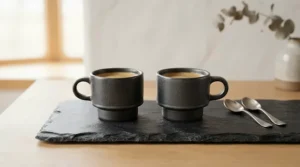
Why should you care? Because an espresso is a tiny, fast-cooling drink. A single shot of roughly 30-40ml hits a cold cup and starts shedding heat within seconds. The cup is half the experience, and the label on the box tells you very little about it.
What actually moves the needle is less glamorous. Cup wall thickness decides how much heat the cup steals from your shot. The glaze finish controls how the rim feels on your lip, how easily stains wash off and how well crema clings. And ceramic glaze safety, which the product photos never mention, decides whether the cup is something you should be sipping from daily at all.
This guide compares seven real, UK-available options across budget, mid-range and premium, from a café-grade Loveramics Egg 80ml Espresso Cup & Saucer to a chunky Le Creuset Stoneware Espresso Mug 100ml. Everything here is analysis based on published specifications and aggregated review sentiment, not hands-on testing. Prices are ranges only, so check current price before you buy.
Porcelain vs Ceramic Espresso Cups at a Glance
Before the product deep-dive, here is the quick version of porcelain vs ceramic espresso cups, split by what you will feel and see in daily use.
| Feature | Porcelain | Stoneware (“ceramic”) | Earthenware |
|---|---|---|---|
| Body density | Very dense, near-zero water absorption | Dense, slightly more open | Porous without glaze |
| Typical feel | Smooth, can be thin yet strong | Chunkier, heavier rim | Thick, rustic |
| Heat behaviour | Stores heat well when preheated | Stores heat well, slower to warm | Good insulation, chips easily |
| Stain resistance | Excellent when glaze is intact | Very good | Depends entirely on glaze |
| Best For | Loveramics Egg, Olympia Whiteware, Royal Doulton Coffee Studio | Le Creuset, Denby Halo Brew | Handmade pottery (check glaze safety) |
Looking at the table, porcelain wins on density and refinement, while stoneware wins on tactile warmth and a forgiving, hand-hugging feel. Neither is automatically better at keeping espresso hot; wall thickness and preheating matter far more than the name on the base. If you want a thin-lipped, café-style sip, lean porcelain such as the Loveramics Egg; if you want a cosy, weighty cup, lean stoneware such as the Le Creuset.
💬 Just one click — help others make better buying decisions too!😊
Top 7 Porcelain vs Ceramic Espresso Cups: Expert Analysis
I picked these seven to cover porcelain and stoneware, loose-leaf luxury and hospitality-grade value. Each analysis rests on published specs and the genuine review signals I could find. Where I couldn’t verify a solid pool of UK reviews, I say so.
1. Loveramics Egg 80ml Espresso Cup & Saucer — the barista-circuit favourite
The standout here is the rounded, tapering egg profile, which is built for café service and sits neatly under a portafilter.
The Loveramics Egg 80ml holds 80ml (2.7oz), which lines up with the classic single-to-generous-double espresso volume. Retailer listings describe commercial-grade porcelain fired at around 1,300°C with absorption under 0.5% (a brand claim). In practice that means the body barely drinks in stains or odours, and it shrugs off dishwashers and the microwave. The cup stands about 6cm tall, which keeps the surface area small and the crema compact.
On the spec sheet, this is porcelain doing exactly what porcelain does best: dense, refined and tough. The brand also says the Egg line was the official cup of the World Latte Art Championship from 2015 to 2023. That’s a pedigree claim, not a customer review.
On reviews, I couldn’t verify a deep UK customer-review pool, so treat the durability story as manufacturer-led until you’ve read recent buyer feedback.
Pros:
- ✅ Dense high-fired porcelain resists staining and chipping
- ✅ 80ml size suits singles and generous doubles
- ✅ Wide colour and matte-reactive glaze options
Cons:
- ❌ Sold per cup and saucer, so full sets add up
- ❌ Premium over generic white porcelain
Expect a range of roughly £10-£20 per cup and saucer; check current price. A fair premium for café-grade porcelain.

2. Royal Doulton Coffee Studio Espresso Cups & Saucers (Set of 4, 110ml) — dipped glazes made for guests
The standout is the half-dipped glaze finish in navy, purple and two greys, nodding to Royal Doulton’s heritage.
The Royal Doulton Coffee Studio set uses porcelain described by one UK retailer as chip-resistant, with dishwasher and microwave safe care. At 110ml each, the cups are a touch generous for a classic espresso; they suit a lungo, a cortado or a double shot with room to spare. The set arrives in a gift box, which says a lot about who it is aimed at.
Based on the spec comparison, this is a hosting set first and a daily workhorse second. Olive magazine named it the best dinner-party espresso set in its 2024 round-up, which fits. The glaze finish looks lovely, but the larger volume means a slightly cooler last sip than a tight 80ml cup, so preheat well.
On reviews, a UK retailer page showed a perfect average from only two ratings, which is far too few to mean much. A US retailer reviewer called the set pricey but high quality.
Pros:
- ✅ Attractive dipped glazes in four colours
- ✅ Four cups and saucers, ready for guests
- ✅ Dishwasher and microwave safe
Cons:
- ❌ Higher cost per cup than basic porcelain
- ❌ 110ml is larger than classic espresso volumes
Roughly £50-£60 for four; check current price. Good for gifting, fair for daily use.
3. Olympia Whiteware Stacking Espresso Cups 85ml (CB471) — hospitality toughness for pennies
The standout is the strengthened rolled edge, designed to survive a busy café’s dishwasher.
The Olympia Whiteware cup holds 85ml, with a 50mm inner diameter, and the listing says it meets the BS 4034 vitrified hotelware standard. A 12-pack weighs about 1.55kg, which works out around 129g per cup before saucers. That’s a solid, properly thick cup that will hold a surprising amount of heat once preheated. Oven, microwave, dishwasher and freezer safe, and stackable to save cupboard space.
What this tells you is that wall thickness, not fancy branding, is doing the heat-retention work here. The trade-off is looks: it’s plain white porcelain with no frills. Saucers are sold separately (CB472), so budget for them.
On reviews, this is mostly sold through catering retailers, and I couldn’t verify a consumer review pool, so I’m not making sentiment claims. Any edge-chip warranty is retailer-specific; read the terms.
Pros:
- ✅ Vitrified, thick and fully dishwasher safe
- ✅ Rolled edges built for chip resistance
- ✅ Stackable and very cheap per cup
Cons:
- ❌ Plain, utilitarian styling
- ❌ Saucers sold separately
Around £25-£35 for a box of twelve; check current price. Superb value if you can use twelve cups.
4. Le Creuset Stoneware Espresso Mug 100ml — the heavyweight with a colour habit
The standout is chunky, enamel-glazed stoneware in a shade for every kitchen.
The Le Creuset mug holds 100ml and measures roughly 8.75 x 6.2 x 6.5cm. It is oven safe to 260°C and dishwasher, microwave and freezer safe, and a UK retailer lists a 10-year guarantee. The interior glaze resists staining, and the thicker stoneware wall stores plenty of warmth. The catch is the guarantee’s fine print: damage from chipping or mishandling is excluded.
Based on the specs, this suits people who like a rounded, cuddly cup in the hand, not a dainty one. One UK review site (Testix) reported no fading or chipping after 20 dishwasher cycles on the Rainbow set, and noted the weight may surprise fans of daintier porcelain.
Treat that as one site’s claim. Retail reviewers also describe the mugs as well made and durable.
Pros:
- ✅ Chunky stoneware holds heat well
- ✅ Huge colour range
- ✅ Ten-year guarantee on UK listings
Cons:
- ❌ Heavier, thicker rim than porcelain
- ❌ Priced above basic cups
Mid-teens each, or around £55-£65 for a set of six; check current price. Worth it if colour and heft matter to you.
5. Denby Halo Brew Espresso Cups (Set of 2, 100ml) — British stoneware with a reactive glaze
The standout is hand-applied reactive glaze made in Derbyshire clay, so no two cups look identical.
The Denby Halo Brew cups hold 100ml and weigh about 119g each, measuring roughly 9 x 6.5 x 5cm. That puts them in near-identical weight territory to the porcelain Olympia Whiteware, a useful reminder that stoneware isn’t automatically heavier. They’re oven, microwave, freezer and dishwasher safe, with a 10-year guarantee, and Denby makes them in England.
On the glaze side, reactive finishes vary cup to cup, so what you see online is a guide, not a promise. Being UK-made, compliance documentation should be straightforward, but you can still ask. The older Studio Grey espresso set was named best neutral duo by Olive magazine in 2024. John Lewis later listed that earlier set as no longer available online, so confirm the current range.
On reviews, I couldn’t verify a large pool for this specific set, so I’m treating the quality signals as retailer-led.
Pros:
- ✅ UK-made with a ten-year guarantee
- ✅ Reactive glaze makes each cup unique
- ✅ Oven, microwave, freezer and dishwasher safe
Cons:
- ❌ Pair pricing raises the per-cup cost
- ❌ Glaze variation means cups won’t match exactly
Roughly £30-£40 for two; check current price. A lovely gift and a durable daily pair.

6. Sweese 2.5oz Porcelain Stackable Espresso Cups with Metal Stand (Set of 4) — the budget set that comes with furniture
The standout is the all-in-one package: four porcelain cups, saucers and a metal stand.
The Sweese set holds roughly 74ml per cup, a tight ristretto-to-single size. Small volume means your shot stays concentrated, but there’s less margin for a fat double. Several round-ups praise it as a value pick and describe the porcelain as lead-free. Treat that as a marketing claim: the real assurance is a declaration of compliance, which you can ask the seller for.
On the spec comparison, the stand is the clever bit; it keeps cups ready to hand and displays them. Wall thickness isn’t published, so heat retention is an unknown; preheating becomes essential.
On reviews, the praise I found comes from affiliate-style round-ups, not verified customer data. Read recent buyer reviews on the amazon.co.uk listing, and confirm the variant and stock on your store.
Pros:
- ✅ Complete set with saucers and stand
- ✅ Compact volume suits ristretto and single shots
- ✅ Budget-friendly entry into porcelain
Cons:
- ❌ Wall thickness not published
- ❌ Metal stand adds counter clutter
Typically under £30 for four; check current price. Fine value if you preheat and vet the reviews.
7. Lareina 3-Ounce Porcelain Espresso Cups with Saucers, Spoons and Stand — matte black for the dark-kitchen crowd
The standout is the matte black glaze finish paired with spoons and a stand in one set.
The Lareina cups hold about 90ml, and the bundle includes saucers and spoons. Round-ups label the porcelain “lead-free” and “BPA-free”. The second claim is mostly noise: BPA is a plastics chemical, not a porcelain concern, so lean on lead and cadmium documentation instead.
Matte glazes feel velvety, but they can show scuffs and fingermarks more readily than gloss, and rim feel varies. A 90ml cup suits a double shot well. As with the Sweese, wall thickness isn’t stated, so preheat religiously.
On reviews, I only found round-up endorsements, not a verified review pool. Check the live amazon.co.uk listing for variant and availability.
Pros:
- ✅ Spoons, saucers and stand included
- ✅ Matte black option for modern kitchens
- ✅ 90ml volume suits doubles
Cons:
- ❌ Wall thickness unpublished
- ❌ Matte surface may show scuffs
Usually £15-£30 for a set; check current price. A style pick more than a performance pick.
Top 7 Comparison Table
| Product | Material | Capacity | Price Range | Best For |
|---|---|---|---|---|
| Loveramics Egg 80ml | High-fired porcelain | 80ml | £10-£20 per cup | Home baristas |
| Royal Doulton Coffee Studio | Porcelain | 110ml | £50-£60 for 4 | Hosting and gifts |
| Olympia Whiteware CB471 | Vitrified porcelain | 85ml | £25-£35 for 12 | Budget and bulk |
| Le Creuset | Stoneware | 100ml | Mid-teens each | Colour lovers |
| Denby Halo Brew | Stoneware | 100ml | £30-£40 for 2 | UK-made gift |
| Sweese | Porcelain | ~74ml | Under £30 for 4 | Ristretto fans |
| Lareina | Porcelain | ~90ml | £15-£30 per set | Matte black styling |
Looking at the comparison, the Olympia Whiteware delivers the strongest value if you want solid porcelain at pennies per cup, while the Loveramics Egg is the better bet for a refined shape that earns its premium. Style buyers should note that the Royal Doulton Coffee Studio and Denby Halo Brew trade a higher per-cup cost for glaze character and a gift-ready finish. The Sweese and Lareina sets are tempting bundles, but unpublished wall thickness means you’re gambling on heat retention.
What Is the Difference Between Porcelain vs Ceramic Espresso Cups?
Porcelain is a type of ceramic: a white, fine-grained, vitrified body made from kaolin, feldspar and quartz and fired at very high temperatures, so it becomes dense and almost non-porous. “Ceramic” on a listing usually means stoneware or earthenware, which are typically thicker, slightly more porous and chunkier in the hand.
That’s the tidy answer. The messy one is that Britannica points out the line between porcelain and stoneware isn’t crisp: some heavily potted porcelains turn opaque, while thinly potted stonewares can show some translucency. In other words, you can’t judge a cup by name alone.
What matters at the café counter is behaviour. Porcelain’s fine, dense body can be made thin without losing strength, giving a delicate lip and a crisp sip. Stoneware tends to be chunkier, giving a warmer, rounder feel. Both can hold heat; the difference comes from how much material surrounds your shot.
So when you weigh porcelain vs ceramic espresso cups, treat the material as a starting point and judge the cup by wall thickness, glaze and safety paperwork.

Espresso Cup Thickness and Heat Retention: What Actually Keeps a Shot Hot
Espresso cup thickness and heat retention are linked by simple physics. A thicker wall has more mass, and mass soaks up heat. If the cup starts cold, it steals warmth from your shot. If it starts warm, it hands warmth back and slows the cooling.
Hospitality suppliers commonly suggest preheating cups to roughly 50-60°C, with espresso leaving the machine at around 80°C. One engineering write-up (Glew Engineering) measured a ceramic cup starting at about 26.5°C and reaching roughly 50°C after 150 seconds of hot-water preheating. The lesson is that preheating takes longer than a quick swirl.
Based on that reasoning, a thick Olympia Whiteware cup is a great thermal reservoir once warmed, while a thin porcelain cup warms faster but offers less buffer. Glass can insulate well when it’s double-walled, but it stores less heat than ceramic. I couldn’t find a published head-to-head test of these seven cups, so treat heat claims as reasoning from construction, not measured rankings.
The practical takeaway: preheat every time, and pick thickness for how fast you drink.
Cup Wall Thickness: How to Judge It Before You Buy
Cup wall thickness is rarely printed on a listing, but you can estimate it. Start with weight and volume. The Olympia Whiteware works out at roughly 129g per cup for 85ml, while the Denby Halo Brew weighs about 119g for 100ml. Both are reassuringly substantial. If a listing gives no weight and the photos show a paper-thin rim, expect a fast-cooling cup.
Next, look at the rim versus the body. A thin lip feels refined on your mouth, while a thicker body retains heat. The best espresso cups often pair both, and rounded profiles like the Loveramics Egg are built around that balance.
Then consider your habits. If you sip over two or three minutes, thick walls and preheating pay off. If you down it in thirty seconds, thinner, more elegant porcelain loses little.
A final tip: check the base. A thick, flat foot gives stability and thermal mass, and helps the cup survive a dishwasher rack. When it comes to cup wall thickness, heavier isn’t always better, but “too light to weigh” is usually a warning.
Glaze Finish: Gloss, Matte and Reactive Glazes Compared
Glaze finish shapes how a cup looks, feels and ages. Here’s what each type does for espresso.
Gloss
Gloss glazes are smooth, easy to clean and kind to crema, which clings less on irregular surfaces. Most plain white porcelain, including the Olympia Whiteware, uses gloss.
Matte
Matte glazes feel velvety and look modern, like the black Lareina. They can show scuffs and fingermarks more easily, and rim feel varies between brands.
Reactive and dipped
Reactive glazes, as on the Denby Halo Brew, change during firing, so each cup is slightly unique. Dipped glazes, like the Royal Doulton Coffee Studio, add contrast but can leave a visible edge line.
Whatever you choose, the inside should be smooth and unbroken. Hairline cracks (crazing) can harbour stains and, more importantly, are a sign the glaze is wearing. A good glaze finish is not just decoration; it’s the barrier between your coffee and the clay body.
Ceramic Glaze Safety: UK Rules, Lead and Cadmium, and What to Check
Ceramic glaze safety is where the unglamorous paperwork earns its keep. In Great Britain, ceramic articles meant for food contact must not release more than set limits of lead and cadmium, and the manufacturer or importer must hold documentation proving compliance. The rules sit in The Materials and Articles in Contact with Food (Amendment) (EU Exit) Regulations 2019, which carries migration limits in milligrams per litre for different article categories.
Why does this matter more with coffee? Acidic drinks are more likely to draw metals out of poorly made glaze, and firing temperature, glaze quality and contact time all play a part. Handmade or antique pieces deserve extra caution, as do cups labelled decorative only.
Here’s a simple checklist:
- Buy cups sold for food and drink, not “decorative use only”.
- Prefer established brands and sellers who can supply a declaration of compliance.
- Be wary of unusually bright, glossy exterior decoration on the rim.
- Retire cups with chips, deep scratches or crazing.
A “lead-free” badge on a listing is a claim, not proof. Ask for the paperwork when in doubt, especially with unbranded sets.
Small Espresso Cups Buy: How to Choose the Right Size and Set
If you’ve typed “small espresso cups buy” into a search bar, you’ve probably been buried under hundreds of near-identical listings. Use these seven steps to cut through.
- Match volume to your shot. Classic espresso cups hold roughly 60-90ml; some brands cite 80ml as a standard target. Go larger only if you pull doubles, lungos or cortados.
- Choose material by habit. Porcelain for a crisp, refined sip; stoneware for a weighty, warm hand-feel.
- Check weight and thickness. Heavier cups hold heat longer once preheated.
- Inspect the interior glaze. Smooth, glossy and unbroken is best for cleaning and crema.
- Verify food-contact compliance. Ask for documentation if the listing is vague.
- Think about storage. Stackable cups save space; stands add display but take counter room.
- Do the cost-per-cup sums. Include saucers, replacements and guarantees.
When you small espresso cups buy for a household, buy one extra. Chips happen, and matching a discontinued glaze is harder than it sounds.

Common Mistakes When Buying Porcelain vs Ceramic Espresso Cups
Shoppers comparing porcelain vs ceramic espresso cups tend to trip over the same few things.
Buying by label. “Ceramic” and “porcelain” are loose marketing words. A thick stoneware cup can outperform a flimsy porcelain one, so check weight and thickness.
Ignoring volume. A 150ml “espresso” cup swamps a single shot, leaving it lukewarm and the crema stranded. Stick near 60-110ml.
Skipping the preheat. This is the biggest heat-retention mistake. A cold cup erases the benefit of any wall thickness.
Trusting “lead-free” badges. Claims aren’t certificates. Ask for compliance documents, especially on unbranded sets.
Microwaving trimmed or metallic-decorated cups. If a cup has metal rim detail, check care instructions first.
Assuming dishwasher safe means forever. Hand-painted or matte finishes can dull over time, and chipped glaze is a safety issue, not just a cosmetic one.
Overbuying a set. Twelve identical cups sounds great until you realise you drink two espressos a day. Buy the number you’ll actually use, plus a spare.
Porcelain vs Ceramic Espresso Cups vs Glass
Double-wall glass is the glamorous rival. It shows off crema and keeps the outside cool, but it plays by different rules.
| Feature | Porcelain / ceramic | Double-wall glass | Best For |
|---|---|---|---|
| Heat storage | Excellent when preheated | Lower, relies on insulation | Olympia Whiteware, Le Creuset |
| Outside temperature | Warms up | Stays cool | Bodum Pavina style glasses |
| Crema visibility | Hidden | Fully visible | Display lovers |
| Durability | Strong, can chip | Shatters if knocked | Loveramics Egg, Denby Halo Brew |
| Taste neutrality | Excellent | Excellent | Everyone |
Looking at the comparison, ceramic and porcelain win for durability and heat storage, while glass wins on visual drama. If your kitchen is busy, children are around or you wash everything in the dishwasher, Olympia Whiteware or Le Creuset style cups are the safer bet. Glass makes sense as a second set for slow, showy shots.
One more note: glass doesn’t absorb flavours, but neither does well-glazed porcelain. So neutrality isn’t the deciding factor; durability and heat behaviour are.
Long-Term Cost and Maintenance
The sticker price of an espresso cup is a poor guide to its real cost. Think in cost per use. A cup costing around £15 and used daily for five years works out at under 1p per cup of espresso. A £2 to £3 hospitality cup lands even lower, as long as it survives.
Survival is where maintenance comes in. Rinse promptly, avoid scouring pads on matte finishes and don’t stack cups roughly in the dishwasher. Guarantees help, but read the small print: the Le Creuset warranty excludes chipping caused by mishandling, so it’s a manufacturing safety net, not an accident policy.
Replacement availability matters too. Hospitality lines like the Olympia Whiteware are sold in bulk and are easy to top up, while reactive-glaze ranges such as the Denby Halo Brew may change over time.
If you drink one or two espressos daily, buy fewer, better cups. If you entertain often, buy a hospitality set and keep a spare. The cheapest cup is the one you don’t have to replace.
Practical Guide: Preheating, Pulling and Caring for Your Cups
A good cup performs better with a good routine. Here’s a simple one.
Preheat properly. Fill the cup with hot water and let it sit for a couple of minutes, or run a blank shot through the machine into it. Tip out and pull your shot straight away. A swirl and dump isn’t enough, as the earlier numbers show.
Handle the first 30 days with care. Wash by hand once or twice to see how the glaze behaves, then move to the dishwasher if the maker says it’s safe. Avoid sudden temperature shocks, such as pouring boiling water into a stone-cold cup.
Know when to retire a cup. Worn, cracked or chipped surfaces can release more lead or cadmium from a glaze, according to Health Canada’s industry guidance, and longer contact time raises the risk. Retire chipped cups, especially if they hold a hot, acidic drink.
Store smart. Stack only stackable cups, and use felt or paper between saucers to avoid scratches.
Common first-month mistakes: skipping preheating, scrubbing matte glaze with abrasive pads, microwaving metallic trim and keeping cups with hairline cracks.
Real-World Scenarios: Which Cups for Which Kitchen?
The student flat. Budget under £30, shared kitchen, daily use. Go for the Olympia Whiteware: thick, tough and cheap enough to replace. If you want a stand and a tidy display, the Sweese is the alternative, but check recent reviews first.
The dinner-party host. Four to eight guests, occasional use, presentation matters. The Royal Doulton Coffee Studio set gives you matching glazes and gift-box polish, and the 110ml size handles lungos and cortados.
The home barista. A semi-pro machine, two to four shots a day, cares about crema and shape. The Loveramics Egg is the porcelain pick; preheat it and enjoy that compact profile.
The colour-led kitchen. You want the cups to be part of the decor. The Le Creuset gives you chunky stoneware in dozens of shades; the Denby Halo Brew gives you reactive glaze and UK-made credentials for a pair.
Whatever you choose, match volume, budget and daily habit first. The material is the tie-breaker, not the starting point.
FAQ
❓ Are porcelain espresso cups microwave and dishwasher safe?
❓ How many ml should an espresso cup hold?
❓ Do thicker cups really keep espresso hotter?
❓ Is it safe to drink espresso from handmade glazed cups?
❓ Are matte or glossy glazes better for espresso?
Conclusion
The porcelain vs ceramic espresso cups debate has a quieter answer than most listings suggest: porcelain is a ceramic, and the cup you want is defined by thickness, glaze and safety, not by a single word on the box. If you want café-grade refinement, the Loveramics Egg 80ml is the porcelain pick. If you want the best value, the Olympia Whiteware is hard to beat. If you want presentation, choose the Royal Doulton Coffee Studio. If you want colour and weight, go for the Le Creuset, and if you want UK-made character, the Denby Halo Brew fits. The Sweese and Lareina sets suit budget-minded shoppers, as long as you vet reviews and compliance paperwork.
Before you small espresso cups buy, check volume, weight, interior glaze and food-contact documentation. Then preheat, enjoy and replace anything chipped. Your espresso only gets a few seconds to impress, so give it a cup that helps.
Recommended for You
- Best Espresso Cups: 7 Stunning Picks For UK Homes (2026)
- Titanium Mug For Backpacking: 7 Best Ultralight Picks (2026)
- Collapsible Mugs For Hiking: 7 Best Pack-Flat Picks (2026)
Disclaimer: This article contains affiliate links. As an Amazon Associate, I earn from qualifying purchases. If you purchase products through these links, we may earn a small commission at no additional cost to you.
✨ Found this helpful? Share it with your friends! 💬🤗
