
In This Article
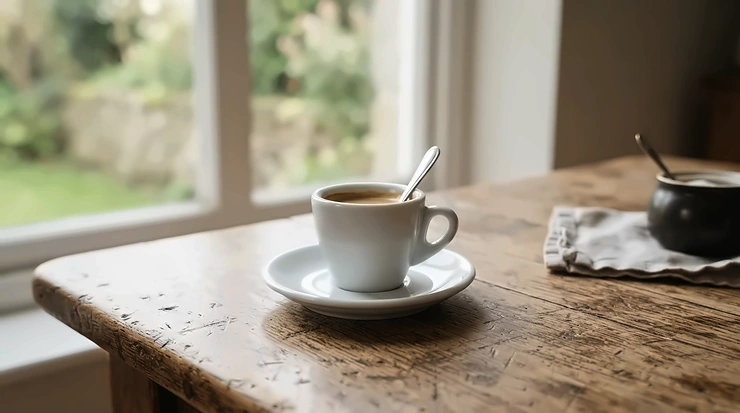
What are the best espresso cups? The best espresso cups are small vessels of roughly 60–100ml, usually porcelain, stoneware or double-wall borosilicate glass. They hold a shot’s heat, protect the crema and slot beneath your machine’s spouts. For UK home baristas in 2026, the right choice depends on cup capacity in ml, material and how you drink.
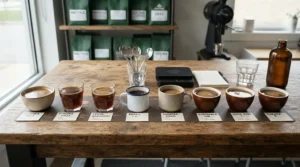
Here’s the awkward truth about home espresso. You’ve saved for a decent machine, agonised over a grinder and dialled in beans until your kitchen smells like a Milanese bar at 8am. Then you pour thirty-odd millilitres of liquid gold into a cavernous novelty mug, and it’s lukewarm and sad by the second sip. The vessel isn’t a bit-part player. It sets the temperature, frames the crema and decides whether your morning shot feels like a ritual or a chore.
The traditional answer is the demitasse, French for “half cup”, which typically holds about 60–90ml. Italian guidance favours a plain white china cup of 50–100ml. Modern makers have widened the field with matt stoneware, seamless glass that shows off the shot and rainbow-hued sets that cheer up a cupboard. More choice is good, but it’s also how people end up with a gorgeous cup that cools a shot in ninety seconds.
This guide compares seven real cups across budget, mid-range and premium. It’s built on manufacturer specifications, UK retailer listings and aggregated owner-review sentiment, not on hands-on testing, which I haven’t done and won’t pretend to. Prices are ranges that were indicative at the time of research, so check the current price before you buy. Along the way you’ll get an honest espresso cups review of what owners agree on, a practical espresso cup buying guide, the crema question, espresso machine compatibility and a look at where colourful espresso cups earn their place.
Quick Comparison Table: The Best Espresso Cups at a Glance
| Cup | Material | Capacity | Price range (indicative) | Best For |
|---|---|---|---|---|
| Acme Espresso Cup | High-fired porcelain | 60ml / 90ml | Around £12–£16 per cup | Daily double shots, long-term durability |
| Loveramics Tulip Espresso Cup | Porcelain | 90ml / 150ml | Around £10–£14 per cup | Latte art practice, colour choice |
| Nuova Point Double Wall Glasses | Borosilicate, air-gap | 80ml / 100ml | Around £8–£12 per glass | Showing off crema |
| Bodum Pavina 80ml Double Wall Glasses | Mouth-blown borosilicate | 80ml | Around £5–£8 per glass | Budget entry, floating-shot look |
| Bialetti Multicolour Espresso Cup Set | Porcelain, handleless | 90ml | Roughly £25–£50 per set of six | Colourful espresso cups for guests |
| Le Creuset Stoneware Espresso Mug | Enamelled stoneware | 100ml | Mid-teens (£15–£18) per mug | Colour, guarantee, gifts |
| PARACITY Double Wall Espresso Cups | Borosilicate, air-gap | 60ml pair (other sizes exist) | Low-teens per pair | Cheapest way to try glass |
Reading across the rows, the Acme Espresso Cup and the Le Creuset Stoneware Espresso Mug are the long-haul buys. The Bodum Pavina 80ml Double Wall Glasses and PARACITY Double Wall Espresso Cups let you try glass for roughly the price of a takeaway flat white. If colour is the priority, the Bialetti Multicolour Espresso Cup Set is the only option here that delivers a rainbow in a single purchase. The price basis differs (per cup, per pair, per set), so compare cost per cup rather than the headline figure.
💬 Just one click — help others make better buying decisions too!😊
Top 7 Best Espresso Cups: Expert Analysis
Each entry pairs the specification with what it means at the counter, plus the review themes that recur across UK retailer listings and owner forums.
1. Acme Espresso Cup — the durable professional’s pick
Acme is a New Zealand brand that turns up in independent UK cafés, and the trade pedigree shows. The cup is thick, dense, high-fired porcelain with a slight taper from rim to base and a thin, rolled rim that sits gently on the lip.
The 90ml version is the one most home users will want. It gives a 50ml double shot room to breathe without looking lost, and the vitrified, non-porous body rinses clean instead of holding coffee oils. A 60ml option suits singles and ristretto. The cups stack neatly, which matters when you’re serving four guests from a cupboard already losing its war with mugs.
Here’s the analytical catch: thermal mass. Heavy porcelain steals heat from a cold-poured shot, so preheating with near-boiling water for about 30 seconds is a requirement, not a flourish. Once warm, the same mass becomes an ally and holds temperature for minutes. That makes the Acme Espresso Cup ideal for slow sippers, the laptop-and-espresso crowd rather than the down-it-in-one Italians.
Owner reviews on Amazon UK and Home-Barista.com, as summarised by a UK roundup, consistently describe years of daily use without chips or cracks, including in dishwashers. Price is the recurring gripe.
Pros:
- ✅ Dense porcelain that holds heat once preheated
- ✅ Chip-resistant, dishwasher-safe build
- ✅ Thin rolled rim feels refined
Cons:
- ❌ Costs more per cup than most rivals
- ❌ Cold-cup heat loss if you skip preheating
Around £12–£16 per cup. A set of four is a real outlay, but per year of use it’s the strongest value here if you hate replacing things. Check current price on Amazon UK.
2. Loveramics Tulip Espresso Cup — built for latte art practice
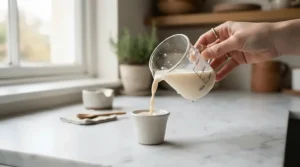
Loveramics has a following among baristas for its Tulip silhouette: a wide, flat-bottomed bowl with gently flared sides. That geometry is the headline, because it gives milk room to spread and pattern, which is why the shape shows up in barista training.
The porcelain is high-fired, so the surface is smooth and non-porous. The 90ml size suits a double shot plus a splash of microfoam, while a 150ml version stretches into cappuccino territory. Per the maker’s pages, the colour range spans classic white, matt black and earthy tones, with seasonal shades rotating in and out. That’s broader than most rivals at this price, which is handy if you like a deliberately mismatched set.
What the spec sheet won’t shout: the walls are a touch thinner than the Acme‘s, so the Loveramics Tulip Espresso Cup cools slightly faster without preheating. Owner feedback suggests a 30-second hot-water rinse closes most of that gap. The wide bowl is also less forgiving of a wobbly walk to the sofa, since more surface means more slosh.
The recurring complaint in Amazon UK reviews is that the handle can feel small for larger hands. It’s dishwasher-safe per the maker. The coloured glazes aren’t listed as microwave-safe, though the white carries no such restriction.
Pros:
- ✅ Wide, flat base suits latte art
- ✅ Wide colour range across core and seasonal ranges
- ✅ 90ml size fits doubles with milk room
Cons:
- ❌ Thinner walls cool faster than thicker porcelain
- ❌ Small handle for bigger hands
Around £10–£14 per cup, which sits in the sweet spot for premium-feeling porcelain. Check current price on Amazon UK.
3. Nuova Point Double Wall Glasses — the glass that puts crema on show
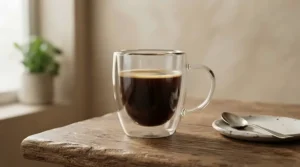
Nuova Point is an Italian glassware maker with a long history supplying professional espresso trade. Its double-wall glasses are borosilicate with a sealed air gap between the layers. The outer surface stays comfortable to hold while the shot keeps its heat through the short window in which espresso is actually drunk.
Precision matters here. This is air-gap insulation, not vacuum insulation. Vacuum vessels outperform it for sustained heat retention, but nobody lingers over 40ml of espresso for an hour, so the air gap is entirely adequate. The 80ml and 100ml sizes cover singles and doubles respectively.
The real appeal is visual. Clear glass lays the layered shot and crema on full display, which is particularly rewarding with lighter-roast single origins where colour variation is pronounced. It’s also a quiet teaching tool. Watching a shot pour tells you more about channelling and flow than any spreadsheet.
Reviewers on Amazon UK and Coffeehit mention that the light, stemless design feels more delicate than porcelain, though chipping reports are rare thanks to the borosilicate. The maker lists them as dishwasher-safe, with top-rack placement recommended to protect the double-wall seal. They aren’t microwave-safe because of the sealed cavity.
Pros:
- ✅ Crystal-clear view of crema and layers
- ✅ Cool-to-touch outer wall
- ✅ Borosilicate resists thermal shock
Cons:
- ❌ Air-gap keeps heat for less time than vacuum designs
- ❌ Feels more delicate than porcelain
Around £8–£12 per glass. It’s a fair price for Italian trade-grade glassware, and your best option if you drink with your eyes first. Check current price on Amazon UK.
4. Bodum Pavina 80ml Double Wall Glasses — the floating-espresso classic
Bodum’s Pavina glasses are individually mouth-blown from borosilicate, and the double wall makes the liquid look as though it’s suspended mid-air. A small silicone vent in the base equalises pressure between the layers, which is the clever bit that stops the glass misbehaving when hot liquid arrives.
The 80ml size sold as a pair sits between a single and a double, which is neat for a 50–60ml doppio with a little headroom. According to Bodum, the glasses are dishwasher-, freezer-, oven- and microwave-safe. Because each is hand-blown, height, thickness and weight vary slightly, so a set won’t be perfectly uniform. Think of that as charm rather than a flaw.
Review sentiment is genuinely mixed, and it’s worth knowing that up front. Positive reviews on retailer sites praise the temperature control and the view of the crema, and one blogger reported a shot still piping hot fifteen minutes after pouring. On the other side, reviewers on Australian and Finnish sites describe the glasses as fragile or smaller than expected. Handled with the same care you’d give any glassware, they tend to please, but they’re not built for a chaotic household.
Pros:
- ✅ Lowest entry price on this list
- ✅ Floating-shot look with a cool outer wall
- ✅ Also handles cold drinks and short teas
Cons:
- ❌ Reports of fragility in owner reviews
- ❌ No handle, so warm glass needs care
Around £5–£8 per glass. That’s a low-risk way to try double-wall glass, and even if one cracks the replacement cost stings less than a Le Creuset. Check current price on Amazon UK.
5. Bialetti Multicolour Espresso Cup Set — a rainbow of six in one purchase
If your moka pot has ever felt underdressed, this is the cup set built as its sidekick. Bialetti’s multicolour set contains six octagonal, handleless porcelain cups, each around 90ml, in assorted colours and stamped with the brand’s embossed logo. The octagonal shape nods to the Moka Express’s faceted body. A stackable version exists, plus an all-white edition for minimalists.
The 90ml capacity comfortably takes a double shot with headroom, and porcelain is a sound heat-holder. The trade-off of handleless design is ergonomics. Once you preheat, the walls get hot, so you’ll pinch the rim or cradle the base, which is charming for after-dinner service and less convenient for a scalding-hot morning shot.
Honesty about reviews: verifiable review data specific to this multicolour set was thin in my research, and I won’t manufacture sentiment. Reviews for other Bialetti cup sets exist but aren’t interchangeable. Lean instead on the spec logic: porcelain, 90ml, six in a box, sold widely through UK independents. Check the review pool on the exact listing before buying, and confirm dishwasher guidance on that page.
Where it wins is the value of variety. Six distinct colours means guests remember which cup is theirs, and the set gives a table personality without needing a matching-set budget.
Pros:
- ✅ Six colours in a single purchase
- ✅ 90ml porcelain suits singles and doubles
- ✅ Stackable version saves cupboard space
Cons:
- ❌ Handleless design can be hot to hold
- ❌ Limited verified review data for this exact set
Roughly £25–£50 per set of six depending on version and seller, so compare listings carefully. Cost per cup lands well below premium single cups, and it’s the pick if you host. Check current price on Amazon UK.
6. Le Creuset Stoneware Espresso Mug — colour with a ten-year guarantee
Le Creuset’s espresso mug is a scaled-down version of its famous stoneware mug, complete with the three-ring motif that echoes its cast-iron pots. The standout feature is the palette. UK colour options include cerise, volcanic, azure, sea salt, shell pink and more, so it’s the easiest way to match a kitchen.
The numbers are worth knowing. It holds 100ml, stands about 6.5cm tall and weighs around 150g. The enamelled stoneware is rated from -23°C to 260°C, and per the maker it’s suitable for the microwave, oven, grill and freezer. It’s also dishwasher-safe and backed by a 10-year guarantee. That heat range is far beyond what espresso demands, but it means the mug doubles as an individual dessert pot without protest.
The 100ml capacity is larger than an 80ml Nespresso-style glass, a difference buyers have noticed. That’s an advantage if you pull doubles or add a dash of milk for a macchiato, but a single ristretto can look lost in it. Thick stoneware also retains warmth but takes longer to heat, so preheating helps here too.
Retailer reviews describe it as cute, well-proportioned and a good match for larger Le Creuset mugs, which fits the design intent.
Pros:
- ✅ Huge range of colours
- ✅ 10-year guarantee plus oven and microwave versatility
- ✅ Chip-resistant enamel finish
Cons:
- ❌ Costs the most per cup here
- ❌ 100ml swamps a single ristretto
Mid-teens per mug (around £15–£18). At that price, a decade’s guarantee brings the cost per year down sharply. Great for gifts. Check current availability on Amazon UK and Le Creuset stockists.
7. PARACITY Double Wall Espresso Cups — the cheap route into glass
For anyone nervous about spending on double-wall glass, the PARACITY range on Amazon UK is the low-stakes experiment. Its standout feature is choice. There’s a 60ml pair for singles, a handled 2.5oz variant, and larger 120ml and 180ml options for cortado and cappuccino sizes, all in clear borosilicate with an air-gap wall.
The sellers state the glass is lead-free borosilicate, which is more heat-resistant than ordinary glass, and handled versions add an anti-scald grip. That’s useful, because the handle solves the biggest ergonomic problem of handleless glass. Because the air gap is the same principle as the Nuova Point, expect the same behaviour: comfortable outer walls and decent heat retention over the few minutes an espresso lasts.
Reviewers on Amazon UK describe the cups as great little vessels that hold a double shot nicely, and praise the double wall, size and durability. The listing itself flags that glass can be damaged in transit, so unbox with care and check for cracks straight away. This is a generic third-party brand, so warranty and quality control are less predictable than with heritage names.
Pros:
- ✅ Lowest cost of admission
- ✅ Handled and handleless variants
- ✅ Multiple size options in the range
Cons:
- ❌ Less brand backing than heritage makers
- ❌ Listing warns of transit damage risk
Typically low-teens per pair at the time of research. It’s the best pick if you want to see what glass does for your crema before investing in something pricier. Check current price on Amazon UK.
Espresso Cups Review: What Owners Actually Agree On
Across retailer pages and owner forums, the espresso cups review themes are remarkably consistent. Buyers value heat retention, ease of cleaning and whether the cup survives the dishwasher. They complain about fragility, small handles and price. Colour and design earn the most praise in stoneware and porcelain sets, while glass earns praise for visibility.
| Cup | Wall type | Dishwasher | Microwave | Recurring review theme |
|---|---|---|---|---|
| Acme Espresso Cup | Thick porcelain | Yes (per maker) | Yes for white; check colourway | Durability, heat retention |
| Loveramics Tulip Espresso Cup | Porcelain | Yes (per maker) | White only | Latte-art shape; small handle |
| Nuova Point Double Wall Glasses | Air-gap glass | Top rack recommended | No | Visual appeal; delicate feel |
| Bodum Pavina 80ml Double Wall Glasses | Air-gap glass | Yes | Yes (per Bodum) | Heat retention vs fragility |
| Bialetti Multicolour Espresso Cup Set | Porcelain | Check listing | Check listing | Limited verified data |
| Le Creuset Stoneware Espresso Mug | Thick stoneware | Yes | Yes | Cute, well-sized, colourful |
| PARACITY Double Wall Espresso Cups | Air-gap glass | Seller states yes (check variant) | Seller states yes (check variant) | Value; shipping fragility |
The table tells a simple story. Thick-walled ceramics win on durability and reassurance, while glass wins on presentation and loses on ruggedness. Where a listing lacks confirmed care details, treat it as an open question and check the exact product page before you put it in the dishwasher.

Cup Capacity in ml: Sizing Your Espresso Cup Properly
Cup capacity in ml is the most common mistake in this category, and it’s the easiest to fix. A classic single espresso is roughly 25–30ml of liquid, and a typical double lands around 50–60ml. Guidance summarised by UK reviewers suggests the cup should hold about 25–30% more than the liquid volume, leaving headroom for the crema and preventing spills.
That makes the working range simple:
- 60–70ml: ideal for singles and ristretto.
- 80–100ml: the versatile sweet spot for doubles, and where most of the picks here sit.
- 120–150ml: for cortado, piccolo or a proper macchiato with milk.
There’s a psychological side too. Oversize the cup and a 30ml shot looks lost, and some guidance suggests crema spreads thin and disappears quicker in vessels above about 90ml. Undersize it and you risk a slopped saucer. If you’re converting from ounces, remember 2.5oz is roughly 75ml, 3oz is roughly 90ml and 4oz is roughly 120ml.
The practical takeaway: the Acme Espresso Cup in 90ml and the Loveramics Tulip Espresso Cup in 90ml are close to ideal for doubles. The Le Creuset Stoneware Espresso Mug at 100ml is generous for a double but big for a single, and the 60ml PARACITY Double Wall Espresso Cups suit single-shot drinkers. Check the stated cup capacity in ml against your usual yield before you fall for a colour.
Espresso Cup Buying Guide: How to Choose the Best Espresso Cups
Choose by capacity first, then material, handle style, machine fit and care needs. Use these seven steps as your espresso cup buying guide, and you’ll avoid most of the expensive mistakes.
- Match cup capacity in ml to your usual shot. Buy 60–70ml for singles, 80–100ml for doubles and 120ml or more only if you add milk. A cup that’s too large makes the shot look meagre.
- Pick a material that matches your habits. Porcelain suits daily durability, stoneware suits heat retention and colour, and double-wall glass suits people who want to watch the crema.
- Decide on handle or no handle. Handles protect fingers, while handleless cups look elegant but can be hot once preheated.
- Check the machine fit. Measure the gap between your spouts or portafilter and the drip tray, and make sure the cup fits beneath.
- Read care details on the exact listing. Dishwasher and microwave suitability vary by colourway, glaze and glass construction.
- Consider guarantees and replacements. A cup with a long guarantee or easy replacement is cheaper over time than the lowest sticker price.
- Buy a set only if you’ll use it. A pair suits daily use, and six only makes sense if you regularly host.
Crema: How Your Cup Shapes the Golden Layer
Crema is the fine-bubbled foam that forms when pressurised water pushes carbon dioxide from the coffee into the liquid. As the pressure drops in the cup, the gas comes out of solution and creates the golden layer. Coffee writer Britta Folmer, quoted by Perfect Daily Grind, emphasises that crema can’t form without pressure.
Where the cup enters the story is temperature. Guidance from coffee specialists suggests a cold cup accelerates the temperature drop in the foam, which speeds up drainage and shortens its life. Warm stoneware or porcelain, by contrast, keeps the temperature gradient more even, so the layer holds together longer. That’s another reason preheating isn’t optional with heavy ceramics.
Shape matters too. A narrower base pushes crema upwards, while a wide bowl gives it more surface area and releases aroma faster. There’s also a sensible caveat: crema mostly tells you about freshness and carbon dioxide, not automatically about taste. Lighter roasts and older beans often produce less foam without being bad. So don’t chase a thick crema at the expense of flavour.
If you want to admire crema, glass options like the Nuova Point Double Wall Glasses and Bodum Pavina 80ml Double Wall Glasses make it visible. If you want to keep it intact, warm porcelain such as the Acme Espresso Cup is the safer choice.
Espresso Machine Compatibility: Will Your Cups Fit Under the Spouts?
Your espresso machine dictates half of this decision. Many cups sold for straight shots run 70–120ml with wider mouths, which helps when you’re catching both spouts from a portafilter or a bottomless basket. Heights matter more than you’d expect, and the Le Creuset Stoneware Espresso Mug at about 6.5cm tall is compact enough for most machines.
A few checks save frustration. Measure the drip-tray clearance on compact machines, and note that some raised drip trays leave barely enough room for a tall glass. Consider how much the cup can splash if your machine spits at the start of the pull. Also think about whether you’ll place the cup on a scale, which favours a wide, stable base.
If you’re still choosing a machine, the Expert Reviews coffee machine roundup compares espresso, bean-to-cup and capsule models tested in UK kitchens. Bialetti positions its cup set as a companion for stovetop or electric machines, which makes the Bialetti Multicolour Espresso Cup Set a natural partner for a moka pot. For a compact machine, the 60ml PARACITY Double Wall Espresso Cups leave the most headroom.
Colourful Espresso Cups: Personality Without the Penalty
Colourful espresso cups are more than décor. They also solve a practical problem, because guests never mix up whose cup is whose. The trick is choosing colour that doesn’t compromise function.
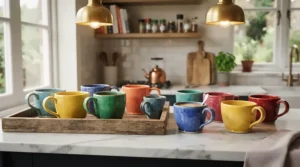
Glazed stoneware and porcelain hold colour best. The Le Creuset Stoneware Espresso Mug offers the widest UK palette, from cerise and volcanic to azure and shell pink, plus a 10-year guarantee. The Loveramics Tulip Espresso Cup brings white, matt black and earth tones with seasonal shades, ideal if you want a tasteful mismatch. The Bialetti Multicolour Espresso Cup Set delivers an instant rainbow for hosting.
There are a few caveats. Metallic or lustre glazes may not be microwave-safe, and this is called out for some Loveramics colourways, so check before heating. Bright interiors can also hide crema colour, so if crema-watching matters, choose a pale or clear interior. And a set that’s colourful but wrongly sized is a bad buy, so lock in cup capacity in ml first, then pick the shade. Colour is the reward, not the criterion.

Porcelain vs Double-Wall Glass vs Stoneware
Each material trades heat, weight, looks and toughness differently.
| Feature | Porcelain | Double-wall glass | Stoneware |
|---|---|---|---|
| Heat retention | Good once preheated | Good for short drinking window | Good, slower to warm up |
| Feel in hand | Refined, medium weight | Light, delicate | Heavier, chunky |
| Visual appeal | Classic, colour-friendly | Shows crema | Rich colours, matt finishes |
| Durability | High, chip-resistant | Lower, breaks if knocked | High, very robust |
| Best examples | Acme Espresso Cup, Loveramics Tulip Espresso Cup, Bialetti Multicolour Espresso Cup Set | Nuova Point Double Wall Glasses, Bodum Pavina 80ml Double Wall Glasses, PARACITY Double Wall Espresso Cups | Le Creuset Stoneware Espresso Mug |
The table simplifies a genuine trade-off. Porcelain is the all-rounder, glass is a visual treat that demands gentler handling, and stoneware is the tank. If you drink alone and slowly, choose thick ceramic. If you’re a watcher who drinks quickly, choose glass. And if you host, choose a set with personality, because in a busy kitchen the Bialetti Multicolour Espresso Cup Set or Le Creuset Stoneware Espresso Mug will survive more abuse than a fragile glass.
Practical Usage Guide: Preheating, Pouring and Care in the First 30 Days
The first month is when habits form, and most espresso cup disappointments come from technique rather than the cup.
Preheat every time. Fill a ceramic cup with near-boiling water for at least 30 seconds, then empty and dry it before the shot lands. Glass is more forgiving, but a rinse still helps.
Pour with intention. Pull directly into the cup where possible, keep it centred under the spouts and avoid swirling aggressively if you want the crema intact.
Wash smartly. Rinse coffee oils soon after drinking, and place double-wall glass on the top rack. Wait for stoneware to cool before washing.
Check before microwaving. Sealed double-wall glass shouldn’t go in the microwave, and coloured glazes may carry restrictions.
Store safely. Stack porcelain gently, and keep glass in a spot where it won’t get knocked.
Inspect regularly. Look for chips on rims and cracks in glazes, especially in the first month when delivery damage might surface.
A simple 30-day routine works well. In week one, focus on preheating. In week two, note which cup keeps your shot warmest. In week three, test different pour heights. In week four, decide whether to expand the set. That small experiment tells you more than any comparison chart.
Real-World Scenarios: Which Cup Suits Which Kitchen?
The student in a shared flat (budget under £15). Cupboard space is tight and breakages are likely. The Bodum Pavina 80ml Double Wall Glasses or the PARACITY Double Wall Espresso Cups give the visual reward for the lowest outlay. Handle with care, and don’t expect them to survive rough treatment.
The couple who host dinner parties. They want a matched or mixed set that looks good on a tray and survives a busy evening. The Bialetti Multicolour Espresso Cup Set gives six distinct colours in one go, and the Le Creuset Stoneware Espresso Mug works as a slightly pricier add-on that doubles as dessert pots.
The home barista chasing latte art. They want a cup shaped for pouring and preheated consistently. The Loveramics Tulip Espresso Cup is purpose-built for that, and the Acme Espresso Cup is the calmer, more traditional alternative when the aim is drinking rather than patterning.
The gift buyer. They want something that arrives beautifully and lasts. The Le Creuset Stoneware Espresso Mug carries a decade’s guarantee and a huge colour range, and a pair of Nuova Point Double Wall Glasses makes a considered present for anyone who loves watching a shot pour.
The pattern is clear: match the cup to the risk profile of the household, not just the look.
Safety and Regulations: Lead, Glaze and Glass Care in the UK
Ceramic cups sold in the UK fall under food-contact rules that limit how much lead and cadmium can migrate from glazes into food and drink. The Materials and Articles in Contact with Food (England) Regulations 2012 set those limits and require documentation for ceramic articles, which is why reputable sellers can supply compliance information on request. Similar rules apply across the rest of the UK.
In practical terms, buy from established sellers, especially for decorated or brightly glazed pieces. Avoid using cups with chipped rims or crazed, cracked glazes, because damaged surfaces are worth retiring. With glass, avoid sudden thermal extremes even with borosilicate, and stop using any cup with a hairline crack.
A few care habits go a long way. Follow the manufacturer’s dishwasher guidance, keep glass on the top rack and let stoneware cool before washing. If a listing doesn’t state material or care details clearly, treat that as a reason to look elsewhere. Safety is boring right up until it isn’t, and the small extra check costs nothing.
Frequently Asked Questions
❓ Where can I buy colourful espresso cups in the UK?
❓ Do espresso cups come with saucers?
❓ How many espresso cups do I need for guests?
❓ Can I use espresso cups for anything besides espresso?
❓ What's the best espresso cup gift for a coffee lover under £20?
Conclusion
The best espresso cups aren’t the prettiest or the priciest. They’re the ones that match your shot size, your machine and your habits. For everyday durability, the Acme Espresso Cup is the strongest all-rounder. For latte art, the Loveramics Tulip Espresso Cup is purpose-built. For watching crema, the Nuova Point Double Wall Glasses are the polished choice, with the Bodum Pavina 80ml Double Wall Glasses and PARACITY Double Wall Espresso Cups as cheaper ways in.
If colour is the main draw, the Bialetti Multicolour Espresso Cup Set gives you six in a box, and the Le Creuset Stoneware Espresso Mug brings a decade’s guarantee with a rainbow palette. Whichever you choose, settle cup capacity in ml first, preheat properly and check the machine clearance. Do those three things and even a modest cup will make a good shot taste better.
Espresso is a small drink that rewards small details. Pick one cup that suits how you actually drink, and let the rest of the collection grow from there.
Recommended for You
- Titanium Mug For Backpacking: 7 Best Ultralight Picks (2026)
- Collapsible Mugs For Hiking: 7 Best Pack-Flat Picks (2026)
- Best Enamel Mug For Campfire: 7 Fire-Safe Picks (2026)
Disclaimer: This article contains affiliate links. As an Amazon Associate, I earn from qualifying purchases. If you purchase products through these links, we may earn a small commission at no additional cost to you.
✨ Found this helpful? Share it with your friends! 💬🤗
