In This Article
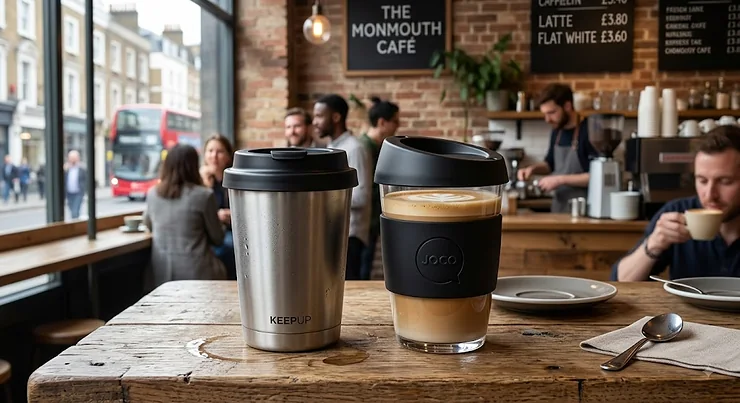
Stand in any UK coffee queue on a Monday morning and you’ll spot the divide instantly: one half of the queue is clutching a chunky steel tumbler, the other is nursing something that looks suspiciously like a wine glass with a lid. Both camps think they’ve got it figured out, and honestly, both have a point. A stainless steel vs glass reusable coffee cup decision isn’t really about which material is “better” in some abstract sense — it’s about which trade-offs you’re willing to live with every single morning for the next few years.

A reusable coffee cup is a portable drinking vessel, typically made from stainless steel, glass, plastic or bamboo fibre, designed to replace single-use paper or plastic cups on a daily basis. The two dominant premium materials — stainless steel and glass — solve different problems: one keeps your flat white hot for hours, the other lets you actually taste it properly.
This matters more than marketing copy usually admits. Government-backed waste research put the number of disposable cups placed on the UK market at close to 3 billion units a year, the overwhelming majority of which are never recycled because their plastic lining can’t be separated from the paper fibre at a standard facility. Switching to a reusable cup — whichever material you land on — is one of the few daily habits with a genuinely measurable environmental payoff, provided you actually use the thing.
We’ve dug into the real specs, aggregated review sentiment, and material science behind seven genuine, currently available cups — four steel, three glass — so you can work out which side of the coffee queue you belong in. No invented five-star reviews, no vague “great product” filler: just honest analysis of what stainless steel and glass actually do differently when hot coffee meets cold Tuesday morning.
Quick Comparison Table
Before we get into the full breakdown, here’s the reusable cup material comparison at a glance. This isn’t the full seven — just a fast reference for the headline differences between the two materials themselves.
| Factor | Stainless Steel | Glass |
|---|---|---|
| Heat retention | Excellent — 4 to 15 hours depending on wall construction | Poor to moderate — 30-90 minutes typical |
| Drop resistance | Dents, rarely breaks | Can shatter or chip on hard floors |
| Taste neutrality | Good, occasionally metallic on bare steel | Excellent — completely flavour-neutral |
| Weight | Moderate to heavy (200-350g) | Moderate, feels heavier per size |
| Typical price range | £18-£35 | £13-£28 |
| Best For | Commuters, cold-brew fans, anyone in a cold office | Coffee purists, home/desk use, short café-to-desk trips |
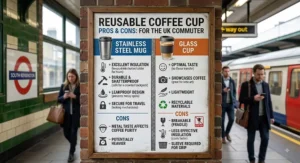
The pattern here is fairly consistent across the market: stainless steel wins decisively on thermal performance and toughness, while glass wins on taste purity and, for a lot of people, on sheer tactile pleasure. Neither material is objectively superior — a commuter doing a 45-minute train journey has completely different needs from someone who fills up at their kitchen machine and walks straight to their desk. Worth noting too that vacuum-insulated steel cups typically outlast simple double-wall glass on temperature retention by a factor of four or five, which is the single biggest functional gap between the two materials.
💬 Already got a favourite material in mind? Skip ahead to see which specific cup wins in that category below..🤗
Top 7 Stainless Steel and Glass Reusable Coffee Cups: Expert Analysis
We’ve picked a genuine spread here — vacuum-insulated steel tumblers built for all-day heat retention, tempered and borosilicate glass cups built for flavour, and a couple of hybrids that try to split the difference. Every product below is a real, currently sold item; prices are shown as ranges because exact Amazon pricing shifts too often to quote reliably, so always check the current price before buying.
1. Chilly’s Series 2 Coffee Cup — best vacuum insulation for daily commuters
The headline feature here is Chilly’s twist-lock lid, which creates a genuinely tight seal rather than the loose press-fit you get on cheaper steel cups. Built from double-walled, powder-coated stainless steel, the Chilly’s Series 2 Coffee Cup uses vacuum insulation to keep drinks hot for up to four hours and cold for up to six — enough to survive a full commute plus a couple of meetings without your tea turning lukewarm. The lid’s drinking surface carries an antimicrobial additive, and the base is a soft rubber ring rather than bare metal, which matters more than it sounds: it means you can set it down on a desk or train table without the usual scrape and skid.
Who should care: anyone whose coffee has to survive more than an hour between pour and first sip. Office workers who make a drink at 8am and don’t touch it until a 9:30 meeting are exactly the use case this cup was engineered for. Reviewers on retailer sites consistently flag the twist mechanism as a genuine upgrade over the brand’s original screw-top, though several also note it isn’t dishwasher safe and needs hand-washing to preserve the seal — a maintenance cost worth weighing against the insulation gains.
Pros:
- ✅ Keeps drinks hot for up to 4 hours, cold for up to 6
- ✅ Tight twist-lock seal outperforms basic press-fit lids
- ✅ Antimicrobial lid surface and non-slip rubber base
Cons:
- ❌ Hand-wash only — not dishwasher safe
- ❌ Not fully leakproof if fully inverted or shaken
At around £20-£24, this sits mid-market. For the insulation performance on offer, it represents solid value against pricier premium steel cups that don’t actually last much longer between hot and cold.
2. KeepCup Brew Cork — best barista-standard glass for flavour purists
KeepCup essentially invented the barista-standard reusable cup category back in 2009, and the KeepCup Brew Cork is their glass flagship — tempered glass body, cork-finished silicone band, splashproof press-fit lid. The tempering process matters more than it sounds: standard glass would be a liability in a bag full of keys and laptop chargers, but heat-toughened glass resists both thermal shock and everyday knocks noticeably better than untreated glassware.
Key spec worth flagging: the glass contains 25% recycled content and the cup is available across five barista-matched sizes from 4oz espresso to 16oz long black, which means you’re not stuck rounding your usual order up or down to fit an odd-sized vessel. Reviewers consistently praise the stackable shape for making latte art and pouring easier, and the taste-neutral surface is the standout selling point — glass simply doesn’t hold onto flavour or odour the way plastic or bare steel can over time.
Who it’s for: coffee drinkers who care more about how their drink tastes than how long it stays hot, and who mostly use their cup between a café counter and a nearby desk rather than on a long commute.
Pros:
- ✅ Tempered glass resists thermal shock and everyday knocks
- ✅ Completely flavour-neutral — nothing dulls the coffee taste
- ✅ Dishwasher safe on the top rack, microwave safe without lid
Cons:
- ❌ Minimal insulation — drink cools within roughly an hour
- ❌ Heavier in the hand than an equivalent steel cup
Priced around £18-£22, it undercuts most premium steel cups while delivering a genuinely different — and for purists, genuinely better — drinking experience.
3. JOCO Glass Reusable Cup — best borosilicate build for espresso lovers
Where KeepCup uses tempered soda-lime glass, the JOCO Glass Reusable Cup is hand-blown from borosilicate glass — the same material used in lab equipment and premium teapots, chosen specifically because it handles rapid temperature swings without cracking. Expert Reviews clocked the 237ml version at roughly 300g, which sounds heavy on paper but the cyclonic base shape distributes weight so it doesn’t feel top-heavy in hand.
The unusual base geometry isn’t just aesthetic — JOCO claims it pulls sugar and sweeteners toward the centre for more even dissolving, a small but genuinely useful detail for anyone who takes sugar in their coffee and hates the syrupy sludge at the bottom of the cup. What most buyers overlook about this model is that it deliberately doesn’t fit most car cup holders or under some premium espresso machine group heads — a trade-off for the wider, more ergonomic drinking rim.
Aggregated customer sentiment is strongly positive on tactile quality and grip, with recurring praise for how secure the splash-proof lid feels compared with cheaper glass competitors, though the £15-£28 wholesale range (varying by size) puts it above KeepCup’s equivalent sizes.
Pros:
- ✅ Borosilicate glass handles thermal shock better than tempered soda glass
- ✅ Cyclonic base improves sugar and sweetener dissolving
- ✅ Non-porous surface won’t harbour bacteria or lingering odours
Cons:
- ❌ Doesn’t fit most car cup holders
- ❌ Among the heavier glass options in this list
Best for home baristas and espresso-machine owners who want a genuine flavour upgrade over plastic, and who aren’t relying on a car cup holder to carry it.
4. Frank Green Ceramic Reusable Cup — best hybrid taste-and-durability pick
The Frank Green Ceramic Reusable Cup is the closest thing on this list to having it both ways: a triple-wall vacuum-insulated stainless steel body wrapped around a ceramic interior lining, so the liquid itself never actually touches bare metal. On paper this means you get steel’s drop resistance and heat retention alongside glass-like taste neutrality — the ceramic lining exists specifically so black coffee drinkers don’t pick up the faint metallic note that bare stainless steel can sometimes impart.
The lid is a one-handed push-button design rather than a twist or screw mechanism, which most reviewers rate as faster and easier to use one-handed on a commute, though the mechanism has more moving parts than a simple lid and a small number of aggregated reviews flag it as fiddlier to strip down and clean thoroughly. One recurring theme in verified feedback is more surprising: despite the ceramic lining being marketed as odour-resistant, some long-term owners report the cup picking up smells faster than their previous bare-steel Frank Green cup — worth knowing if you regularly switch between coffee and, say, bone broth.
Who should care: buyers who’ve been frustrated by metallic aftertaste on cheap steel tumblers but still want steel-level durability and multi-hour insulation.
Pros:
- ✅ Ceramic lining avoids the metallic aftertaste of bare steel
- ✅ Triple-wall vacuum insulation for genuine multi-hour retention
- ✅ One-handed push-button lid, dishwasher-safe lid component
Cons:
- ❌ Base is hand-wash only, not dishwasher safe
- ❌ Push-button mechanism is fiddlier to fully clean than a simple lid
Sitting in the mid-£30s, it’s the priciest cup here — a premium you’re paying specifically for the hybrid material approach rather than for either steel or glass in isolation.
5. S’well Traveler — best long-haul heat retention in steel
If your commute is genuinely long — a 90-minute train ride, a cross-city cycle, a full day of back-to-back site visits — the S’well Traveler is built for exactly that. Its triple-layered construction sandwiches a copper layer between two layers of vacuum-insulated 18/8 stainless steel, and depending on size, that combination keeps drinks hot for up to roughly 9-15 hours and cold for considerably longer. That’s not a typo: this is genuinely in a different insulation league from single or double-wall alternatives.
The wide-mouth opening is a deliberately different design choice from narrow-necked flasks — it’s built to take standard ice cubes for iced coffee as easily as it holds a flat white, and the opening makes it noticeably easier to clean than narrow-neck tumblers where a bottle brush is mandatory. S’well’s official review data shows an average rating in the mid-4s out of 5, with the most consistently praised elements being temperature performance and the “sweat-free” copper-layer exterior that avoids the condensation rings a basic single-wall steel cup leaves on a desk.
Who it’s for: heavy-duty commuters, tradespeople, and anyone who fills up once in the morning and expects the drink to still be genuinely hot at lunchtime.
Pros:
- ✅ Triple-layer copper-and-steel construction gives class-leading heat retention
- ✅ Wide mouth accepts ice and is easier to clean than narrow necks
- ✅ Condensation-free exterior — no sweating or desk rings
Cons:
- ❌ Hand-wash only, which undercuts some of the convenience gains
- ❌ Heavier and bulkier than commuter-focused steel cups like the Chilly’s
Priced around £25-£30 depending on size, it’s a fair ask for genuinely superior thermal performance if your day actually needs it.
6. Circular&Co Stainless Steel Travel Mug — best recycled-steel value pick
The Circular&Co Stainless Steel Travel Mug is built from roughly 90% recycled stainless steel in both the inner and outer layers, which is a meaningfully higher recycled content than most steel competitors on this list — most premium steel cups use virgin-grade 18/8 steel for structural reasons, so hitting 90% recycled content without compromising the double-wall insulation is a genuine engineering achievement, not just a marketing line.
Functionally it uses the brand’s signature “drink360” lid — a push-click mechanism that lets you sip from any point around the rim rather than hunting for a specific spout, which sounds like a gimmick until you’ve tried drinking one-handed while walking and not looking down. Circular&Co has repeatedly been named a best buy by independent reviewers for exactly this lid design, and it’s fully leakproof according to the brand’s own testing and echoed in aggregated Amazon feedback, where reviewers specifically call out the one-handed, no-look drinking experience as a genuine improvement over spout-style lids.
Who should care: sustainability-focused buyers who don’t want to compromise on insulation performance to get a genuinely high-recycled-content product, and anyone who’s been annoyed by fumbling for a spout while driving or walking.
Pros:
- ✅ Around 90% recycled stainless steel in both wall layers
- ✅ Drink360 lid — sip from any point without hunting for a spout
- ✅ 100% leakproof push-click mechanism, dishwasher safe
Cons:
- ❌ Less dramatic insulation than dedicated triple-wall cups like the S’well
- ❌ Available in fewer sizes than the bigger steel brands
At roughly £20-£25, it undercuts most premium steel rivals while offering a genuinely differentiated sustainability story — a rare case where the “eco” angle isn’t just marketing gloss.
7. Bodum Joycup — best budget glass travel mug
Bodum has been making double-wall borosilicate glassware since 2004, and the Bodum Joycup applies that same construction to a lidded travel mug rather than a static tumbler. The double-wall design traps an air gap between two layers of glass, which means the outer surface stays cool to the touch even with near-boiling coffee inside — a neat middle ground between bare glass (which gets uncomfortably hot to hold) and steel (which needs a silicone sleeve to achieve the same effect).
At 0.4 litres, it’s a genuinely generous size for the price point, and the silicone lid is designed to be leak-resistant for a bag commute rather than fully spill-proof for a bike ride — Bodum is explicit in its own product documentation that the mug isn’t leakproof under pressure or if tipped upside down, which is honest but worth knowing before you toss it in a bag next to your laptop. What most buyers overlook is that this is the only genuinely budget-tier option in this whole comparison that still uses real glass rather than plastic — most sub-£20 reusable cups cut costs by switching material entirely.
Who it’s for: home and office use, short trips between kitchen and desk, and anyone who wants glass’s taste-neutral benefits without paying premium-brand prices.
Pros:
- ✅ Double-wall glass stays cool to the touch, unlike single-wall glass
- ✅ Generous 400ml capacity for the price
- ✅ Genuinely budget-tier while still being real glass, not plastic
Cons:
- ❌ Not leakproof under pressure or if inverted
- ❌ Minimal onward insulation compared with vacuum steel
Typically under £20, it’s the easiest entry point into glass reusable cups without committing to premium-brand pricing.
Practical Usage Guide: Getting the Most From Your Reusable Cup
Buying the right cup is only half the job — how you use it in the first month determines whether it becomes a genuine daily habit or ends up abandoned in a drawer. Start by rinsing any new cup, glass or steel, with hot soapy water before first use; manufacturer packaging picks up dust and handling residue that a quick rinse under the tap won’t fully shift. For vacuum-insulated steel cups specifically, avoid the dishwasher unless the manufacturer explicitly confirms it’s safe — the seal around the base and lid gasket is usually the first thing to fail under repeated dishwasher heat cycles, and once that seal degrades, so does the insulation performance you paid for.
A common first-30-days mistake is leaving milky drinks to sit in a sealed cup overnight. Both materials will develop a sour smell from residual dairy far faster than you’d expect, and steel cups with narrow necks are particularly hard to fully rinse without a bottle brush. Get into the habit of emptying and rinsing the same evening, even if you’re not doing a full wash until morning. For glass cups, avoid extreme temperature swings where possible — pouring near-boiling water into a cup straight from the fridge is exactly the scenario tempered and borosilicate glass are designed to survive, but repeated thermal shock over years will still shorten the lifespan versus gentler handling.
Optimisation tip that most owners never discover: warming the empty cup with a small splash of boiling water before you pour your actual drink measurably extends how long a glass cup stays hot, since you’re not using your coffee’s heat to warm up cold glass first. It’s a 10-second habit that meaningfully narrows the insulation gap with steel for short trips.
Real-World Scenarios: Matching the Material to Your Actual Day
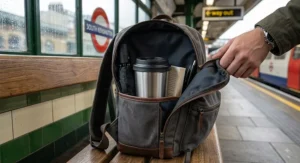
The 45-minute commuter. If you’re travelling by train or bus for the best part of an hour before your first sip, insulation isn’t optional — it’s the entire point. A vacuum-insulated steel cup like the Chilly’s Series 2 or, for longer journeys, the S’well Traveler, is the only sensible choice here. Glass simply cannot compete on this specific metric, however much better it tastes.
The desk-to-kitchen worker. If your “commute” is a walk from the kitchen to a home office, or your coffee machine sits fifteen feet from your desk, heat retention barely matters — your drink is gone well within the window that even basic glass can handle. This is exactly where a KeepCup Brew Cork or Bodum Joycup earns its keep, since you get glass’s flavour-neutral benefit with none of the practical downside that would matter on a long commute.
The budget-conscious student or new starter. If you’re buying your first reusable cup and don’t yet know whether you’ll actually stick with the habit, spending £30-plus on a premium hybrid cup is a hard case to make. Start with a budget entry point — the Bodum Joycup or a basic KeepCup — prove the habit sticks for a few months, then upgrade to a premium insulated steel cup once you know your actual usage pattern rather than guessing upfront.
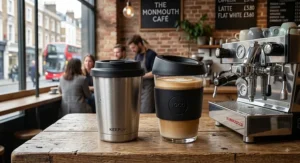
Glass or Stainless Steel Coffee Cup Which Is Better?
There’s no single right answer to glass or stainless steel coffee cup which is better — the honest answer depends entirely on how long the gap is between pouring your drink and finishing it, and how much you personally care about flavour purity versus practical toughness.
Where stainless steel wins decisively: heat retention over more than about 60-90 minutes, resistance to breakage in a bag or on a hard floor, and general low-maintenance durability across years of daily use. Where glass wins decisively: flavour neutrality (steel, even good steel, can occasionally impart a faint metallic edge that trained palates notice on black coffee), visual satisfaction of actually seeing your drink, and typically lower entry price for a comparable size. Reviewers who’ve tried both consistently frame the choice not as “which is better” in the abstract, but as “which trade-off am I actually going to notice in daily use” — and for most people, that comes down to commute length more than any other single factor.
✨ Torn between the two? The comparison table above breaks down exactly which factor tips the scale your way.🤗
Stainless Steel Cup vs Glass Cup Durability
On stainless steel cup vs glass cup durability specifically, the physics are straightforward and not really in dispute. Stainless steel deforms under impact — it dents, and a dent is cosmetic rather than functional in the vast majority of cases. Glass, even tempered or borosilicate glass engineered specifically to resist breakage, has a failure mode that’s binary: it either survives the drop intact or it shatters, with very little middle ground. Independent field testing from consumer groups such as Which?’s reusable cup and travel mug testing has consistently found that lid seal quality varies more between brands than the base material does — meaning durability isn’t purely about steel versus glass, it’s also about lid engineering, something worth checking regardless of which material you choose.
Drop Resistance
Drop resistance is where the two materials diverge most sharply in practice. A steel cup dropped from typical hand height onto tile or pavement will, at worst, pick up a dent or a scuff to the powder coating — annoying, but it won’t affect function. A glass cup dropped from the same height has a real chance of cracking or shattering outright, particularly on tile, concrete or tarmac rather than carpet. Tempered and borosilicate glass close that gap considerably versus ordinary drinking glass, but they don’t eliminate the risk entirely — several long-term glass-cup owners report their cup surviving years of gentle use before one unlucky drop ends it completely. If you’re clumsy, cycle to work, or regularly juggle a cup with a bag and a phone, steel is the lower-anxiety choice by a meaningful margin.
Insulation Difference
The insulation difference between the two materials is the single biggest functional gap on this whole list, and it comes down to construction rather than material purity alone. Vacuum-insulated stainless steel — where two steel walls sandwich a genuine vacuum layer — is one of the most effective heat-retention technologies available in consumer drinkware, capable of holding a drink meaningfully hot for anywhere from four to over twelve hours depending on wall thickness and cup quality. Double-wall glass, by contrast, traps a simple air gap rather than a true vacuum, and while that’s a real improvement over single-wall glass, it typically only extends “comfortably hot” drinking time to somewhere around 60-90 minutes before the drink drifts toward lukewarm. If your personal test is “will this still be hot at my desk two hours from now,” steel wins outright; if your test is “will this still taste good in the next twenty minutes,” the gap barely matters.
Cleaning Ease
Cleaning ease genuinely tips in glass’s favour for most people, and it’s one of the most underrated factors in the whole stainless steel vs glass reusable coffee cup decision. Tempered and borosilicate glass cups are frequently dishwasher safe on the top rack, and because you can usually see residue and staining directly through the material, you know immediately when a rinse hasn’t been thorough enough — something you simply can’t verify with an opaque steel interior. Vacuum-insulated steel cups, on the other hand, are very often hand-wash only specifically because dishwasher heat cycles can degrade the seal around the vacuum layer over time, which means daily cleaning becomes a genuine chore rather than a five-second dishwasher stack.
The practical knock-on effect: steel cups are more prone to lingering odours from milky or sweet drinks precisely because thorough hand-washing gets skipped on busy mornings, while glass cups tend to get properly cleaned more consistently simply because dishwasher use requires no extra thought. If low daily maintenance matters more to you than raw insulation performance, that’s a real point in glass’s favour that specification sheets rarely highlight.
How to Choose a Reusable Cup Material for Your Coffee Habit
- Work out your actual gap between pouring and drinking. Under 30 minutes, material barely matters for temperature; over an hour, steel becomes close to essential.
- Be honest about how clumsy your routine is. Cycling, running for buses, or juggling a phone and bag all favour steel’s forgiving drop resistance.
- Decide how much flavour purity actually matters to you. Black coffee and tea drinkers notice metallic notes far more than milky drink drinkers do.
- Check your washing-up habits, not your intentions. If you know you won’t hand-wash daily, factor that into whether a hand-wash-only steel cup is realistic.
- Set a genuine budget before you start browsing. Premium hybrid cups in the mid-£30s only make sense once you know the habit will stick.
- Consider where the cup actually lives day to day. A desk-bound cup can prioritise taste over insulation; a bag-carried commuter cup can’t.
- Check the lid mechanism as carefully as the body material. As Which?’s testing repeatedly shows, seal quality between brands varies more than the base material does.
Common Mistakes When Buying a Reusable Coffee Cup
The most common mistake is buying based on brand recognition rather than matching the insulation profile to actual daily use — plenty of buyers pay a premium-steel price for a cup that then sits half-full and lukewarm on a desk all morning, when a £15 glass cup would have done the identical job for less money. A close second is ignoring lid mechanism entirely and assuming all steel or all glass cups seal the same way; twist-lock, push-button and screw-top lids all have meaningfully different leak resistance and cleaning difficulty, regardless of what the cup body is made from.
Buyers also frequently underestimate size needs, picking an 8oz cup to save money and then discovering it doesn’t match their usual 12oz café order, which defeats the “bring your own cup” habit the moment it becomes inconvenient. Finally, plenty of people skip checking whether their chosen cup is genuinely dishwasher safe versus merely “dishwasher safe on the lid only” — a distinction that’s easy to miss in product listings and expensive to discover the hard way once a hand-wash-only vacuum seal fails early.
Long-Term Cost and Maintenance
Looking at total cost of ownership rather than sticker price changes the calculation meaningfully. A £20 steel cup that survives five years of daily use and consistently earns you a 25p-50p discount at major UK coffee chains pays for itself within a matter of months and then keeps paying dividends for years — three coffees a week at a 25p discount works out to roughly £39 saved annually, easily covering the cost of any cup in this comparison inside a single year. Glass cups, while typically cheaper upfront, carry a small ongoing replacement risk that steel simply doesn’t: even careful owners occasionally report a cup surviving years before one unlucky drop ends its life outright, which resets the cost calculation to zero and starts it again.
Maintenance costs differ too, just less visibly. Hand-wash-only steel cups cost time rather than money — a genuinely repeated five-minutes-a-day habit across a working year adds up to real hours, whereas dishwasher-safe glass cups fold into an existing routine at effectively zero extra time cost. Neither factor should be the sole deciding element, but both are worth weighing against the sticker price rather than treating the purchase price as the whole story.
Safety, Regulations and Compliance for Reusable Cups in the UK
All the cups covered here are BPA-free by manufacturer specification, and stainless steel and glass are both materials with a long track record of food-safe use with no plastic-leaching concerns of the kind that affect some lower-grade reusable plastics under heat. UK and EU food-contact material regulations require any component that touches your drink — cup body, lid interior, gasket — to meet specific migration-limit testing, and reputable brands publish this compliance information on request even when it isn’t printed directly on packaging.
Beyond material safety, there’s a genuine environmental-policy dimension worth knowing about. From 2024, UK businesses with ten or more full-time staff have faced new requirements around dedicated cup recycling infrastructure and reporting, part of a wider extended producer responsibility push aimed squarely at the low single-use cup recycling rate — campaign groups have been pushing for stronger measures for years, arguing that voluntary industry schemes alone haven’t shifted the underlying disposal problem. None of that regulatory detail should change which cup you personally buy, but it’s useful context for why so many UK coffee chains have leaned so heavily into “bring your own cup” discount schemes over the past few years — reusables are increasingly a policy priority, not just a lifestyle choice.
✨ Ready to Make the Switch?
🔍 Whichever material wins for your routine, ditching disposables is the bigger win here. Check current pricing on any of the seven cups above and pick the one that actually matches how your morning really goes — not just how it looks on a shelf.

Frequently Asked Questions
❓ Is stainless steel or glass better for a reusable coffee cup?
❓ Does a stainless steel cup change the taste of coffee?
❓ Can glass reusable cups go in the dishwasher?
❓ How long do stainless steel travel cups keep drinks hot?
❓ Are reusable coffee cups worth it compared to disposable cups?
Conclusion
The stainless steel vs glass reusable coffee cup question ultimately isn’t a contest with a single winner — it’s a mirror held up to your actual routine. If your coffee has to survive a real commute, a cold office, or a habit of forgetting about it for an hour, vacuum-insulated steel from a brand like Chilly’s or S’well is the only material built for that job properly. If your coffee’s journey is short, and what you actually care about is tasting your drink exactly as it was made, a glass cup from KeepCup, JOCO or Bodum will consistently outperform steel on the one metric specification sheets can’t capture.
What the seven cups above make clear is that this isn’t really steel versus glass as rigid camps — it’s a spectrum, with hybrid cups like the Frank Green ceramic model sitting deliberately in the middle, and recycled-content options like Circular&Co proving you don’t have to sacrifice sustainability credentials to get proper insulation performance. Whichever you land on, the bigger win is simply making the switch away from disposables in the first place, and sticking with it long enough for the habit — and the savings — to actually compound.
Recommended for You
- Stainless Steel Coffee Cup No Plastic Taste: 7 Winners for 2026
- Stainless Steel Reusable Coffee Cup: 7 Cups That Won’t Rust (2026)
- Bamboo Coffee Cup vs Glass Coffee Cup: 7 Best Picks for 2026
Disclaimer: This article contains affiliate links. As an Amazon Associate, I earn from qualifying purchases. If you purchase products through these links, we may earn a small commission at no additional cost to you.
✨ Found this helpful? Share it with your friends! 💬🤗
