In This Article
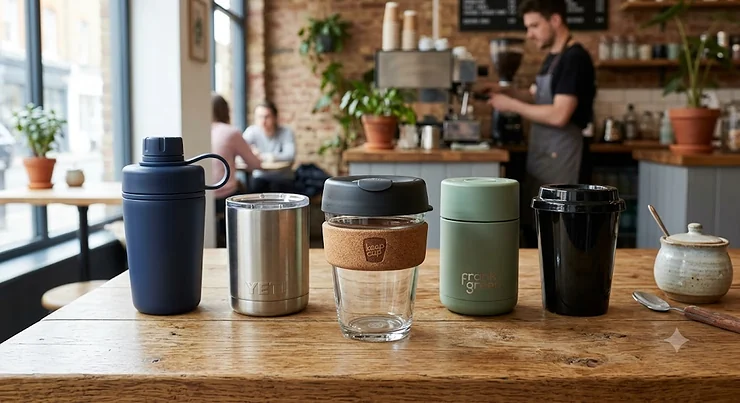
There’s a particular kind of guilt that lives in the bottom of a handbag: the reusable cup you bought with the best of intentions, now growing something unspeakable next to your keys. You are not alone. Roughly a third of us own a reusable cup we never actually use, and the reason is almost always the same — we bought the wrong one for how we actually drink coffee. So, KeepCup vs competitors: is the cup that started the category still the smartest buy, or has the field caught up?
What is KeepCup vs competitors, in short? It’s a straight comparison of the original barista-standard reusable cup against the rivals that followed it — bamboo fibre, recycled paper, ceramic-lined steel and collapsible silicone cups — judged on material, insulation, leak protection, price and how each one actually behaves in a coffee shop queue.
KeepCup earned its reputation fairly. It was the first reusable cup sized to match espresso machine portafilters, which is why baristas still recognise it on sight. But “first” isn’t the same as “best for you,” and the reusable cup market has quietly become crowded with genuinely clever alternatives. Some solve problems KeepCup never tried to fix — insulation, portability, using up existing waste. Others are just prettier versions of the same idea. This guide pulls apart seven real, current cups so you can work out which camp you’re in before you spend your money.
Reusable Cup Showdown: Quick Comparison Table
Before the deep dive, here’s the shape of the market at a glance. All prices are UK ranges at the time of research and will vary by retailer, size and colourway — always check current pricing before buying.
| Cup | Material | Insulated? | Price Range | Best For |
|---|---|---|---|---|
| KeepCup Original | Polypropylene plastic | No | £12-£18 | Budget-conscious daily commuters |
| KeepCup Brew Cork | Tempered glass + cork | No | £22-£25 | Purists who want a clean taste |
| Ecoffee Cup | Bamboo fibre | No | £10-£13 | Lightweight eco-first buyers |
| Circular & Co. Cup | Recycled paper cups | Yes | £12-£17 | Anyone who wants closed-loop recycling |
| frank green Ceramic Reusable Cup | Stainless steel + ceramic lining | Yes | £28-£32 | Long commutes, hot drinks that need to stay hot |
| HuskeeCup | Coffee husk composite | No | £11-£15 | Café regulars and minimalists |
| Stojo Collapsible Cup | Food-grade silicone | No | £12-£16 | Bag-and-pocket portability |
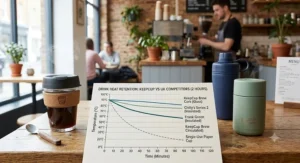
Look at that spread and a pattern jumps out immediately: price has almost nothing to do with insulation, and insulation is the single biggest fork in the road for this whole category. Buyers chasing the cheapest option often end up with a cup that goes lukewarm in twenty minutes, while buyers chasing prestige (looking at you, ceramic-lined steel) sometimes pay a premium for a feature — all-day heat retention — they didn’t actually need. The honest starting question isn’t “which brand is best,” it’s “do I finish my coffee in ten minutes or ninety.”
💬 Found a cup that fits your routine already? Bookmark this page and come back before you buy — the comparison tables below might change your mind.
Top 7 Reusable Coffee Cups: Expert Analysis
1. KeepCup Original — the barista-standard original, made in the UK
The KeepCup Original is the cup that invented this entire category back in 2009, and its UK-manufactured version is still built to the exact dimensions of a café espresso machine’s portafilter. That single design decision — matching the cup to the equipment — is why baristas can steam and pour into it without a second thought. It comes in four barista-standard sizes from a 4oz espresso shot to a 16oz long black, with an unbreakable, dishwasher- and microwave-safe polypropylene body and a plug-in lid that closes flat for sprinting-for-the-bus situations. In practice, this means less faff at the till and a genuinely bombproof cup — the splashproof press-on lid is designed to behave like a disposable cup lid, so you can fill it to the brim and drink with the lid on or off.
Who should buy it: anyone who wants the safest, most recognisable choice with the lowest chance of an awkward “sorry, what size is this?” moment at the counter. Reviewers consistently note that it’s the most durable cup in this list — dropped, washed daily, thrown in bags for years without cracking — though the trade-off is zero insulation, so a flat white goes tepid within twenty to thirty minutes.
Pros:
- ✅ Universally recognised by baristas, fastest at the till
- ✅ Genuinely tough — plastic body shrugs off drops
- ✅ Every part is replaceable if lost or damaged
Cons:
- ❌ No thermal insulation whatsoever
- ❌ Plastic can pick up a faint taste over years of use
At £12-£18 depending on size, the KeepCup Original remains the sensible default — not the most exciting cup here, but the one least likely to let you down.
2. KeepCup Brew Cork — tempered glass with a natural cork grip
Move up KeepCup’s own range and you land on the KeepCup Brew Cork, a tempered soda-lime glass cup wrapped in an upcycled cork band instead of plastic sleeving. Glass is naturally non-porous and inert, so it never carries over the ghost of yesterday’s flat white the way plastic occasionally can, and the cork band does double duty as both grip and heat shield. One long-term user summed it up plainly: it’s proper tempered glass with a cork band that fits the hand well, the lid clicks securely into place, and baristas spot it instantly.
Based on the spec comparison with the entry-level Original, the extra cost buys you genuine material upgrade rather than branding — tempered glass is scratch- and stain-resistant in a way polypropylene simply isn’t after a couple of years of dishwasher cycles. What most buyers overlook is that glass, while chip-resistant, is not literally unbreakable; a hard drop onto tile will crack it where the plastic Original would likely survive.
Pros:
- ✅ Zero flavour transfer thanks to inert glass
- ✅ Cork band feels premium and insulates the hand
- ✅ Ages well — resists scratching and staining
Cons:
- ❌ Can chip or crack on a hard drop
- ❌ No thermal insulation, same as the plastic Original
At £22-£25, the KeepCup Brew Cork sits mid-pack in price but rewards anyone who’s tired of plastic-tasting coffee by mid-afternoon.
3. Ecoffee Cup — bamboo fibre and the lightest eco pick
The Ecoffee Cup takes a different material route entirely: a shell made from bamboo fibre blended with cornstarch, a plant material chosen because bamboo is widely regarded as one of the fastest-renewing, most sustainable crops available. That composite makes for a genuinely light cup — around 220g fully assembled — with a resealable, non-drip silicone lid and a grippy sleeve. The naturally sterile bamboo material also avoids any of the faint plasticky aftertaste some drinkers report from cheaper polypropylene cups.
Here’s what to weigh: a reviewer who trialled the cup alongside her usual KeepCup for a week concluded it came in cheaper and made more sense for a longer drink she wanted to sip slowly, though the feel in-hand took some getting used to compared with her regular cup. Reviewers broadly agree it undercuts KeepCup on price while matching it on durability, provided you avoid the microwave — bamboo composite isn’t microwave-safe, unlike KeepCup’s plastic range.
Pros:
- ✅ Noticeably lighter than glass or steel alternatives
- ✅ Undercuts most KeepCup models on price
- ✅ Dishwasher safe, no flavour taint reported
Cons:
- ❌ Not microwave-safe, unlike KeepCup plastic cups
- ❌ Silicone lid seal wears faster than KeepCup’s plug lid
Typically £10-£13, the Ecoffee Cup is the cup to reach for if your priority is “as light and as cheap as possible without feeling flimsy.”
4. Circular & Co. Cup — built from six recycled paper cups
Formerly known as the rCUP, the Circular & Co. Cup solves a different problem entirely: instead of reducing future waste, it recycles past waste directly into its own body. Circular & Co. describes it as the world’s first cup made from used cups that have been cleaned, shredded and blended with recycled plastic polymer from cup lids, and the company has reported recycling well over five million single-use cups in its first couple of years, with roughly six disposable cups going into the material for every one reusable cup produced. Unlike KeepCup’s uninsulated range, this one is double-walled and genuinely keeps drinks warm.
What most buyers overlook about this model is the lid mechanism — a one-handed push-to-open, push-to-close design that lets you drink from anywhere around the rim rather than hunting for a specific spout. Aggregated Trustpilot sentiment is strongly positive on durability, with owners describing years of daily building-site and commute use without failure, though a small number of reviews mention needing a replacement seal after heavy use (Circular & Co. supplies these free).
Pros:
- ✅ Made from genuinely recycled single-use cups
- ✅ Insulated — keeps drinks warm for 60-90 minutes
- ✅ One-handed lid works from any angle
Cons:
- ❌ Bulkier in the hand than a slim KeepCup
- ❌ Occasional seal replacement needed after heavy use
At £12-£17, the Circular & Co. Cup is the strongest pick here for anyone who wants their purchase to directly represent waste diverted from landfill, not just future waste avoided.
5. frank green Ceramic Reusable Cup — ceramic-lined premium insulation
The frank green Ceramic Reusable Cup is the premium end of this list by some distance: a stainless steel body with a ceramic interior lining, triple-wall vacuum insulation, and a push-button lid that’s become something of a status symbol on Instagram. The ceramic lining exists to solve a real problem — plain steel cups can leave a faint metallic note in coffee, and frank green’s fix is to line the interior so your drink tastes the way it’s meant to, without any metallic edge. Vacuum insulation between the walls means it holds heat far longer than any uninsulated KeepCup.
Reviewer sentiment is more divided here than on any other cup in this list. Aggregated customer feedback on frank green’s own UK site shows solid average ratings, with several reviewers praising temperature retention and design. But one detailed independent long-term review found the drinking experience frustrating: the reviewer found the drinking hole sat too far from the lip to seal comfortably with the mouth, and ended up going back to a different insulated mug entirely. The spec sheet won’t tell you this, but the bulk that comes with proper insulation is a real trade-off against a slim KeepCup in a bag or car cupholder.
Pros:
- ✅ Best-in-class heat retention of this whole list
- ✅ Ceramic lining avoids any metallic aftertaste
- ✅ Extensive colourways for personalisation
Cons:
- ❌ Noticeably bulkier and heavier than KeepCup or Ecoffee Cup
- ❌ Some reviewers find the drinking hole awkward to seal
Around £28-£32, the frank green Ceramic Reusable Cup asks a real premium for genuine thermal performance — worth it if you regularly go two hours between sips, overkill if you drink your coffee in fifteen minutes flat.
6. HuskeeCup — coffee husk composite, café-service favourite
The HuskeeCup takes sustainability a step further upstream than any other cup on this list by using coffee husk — the papery skin discarded during coffee milling — blended into a composite polymer. It’s a genuinely elegant idea: the cup is made from a byproduct of the industry it serves. The shell has distinctive ribbed fins that create a cool-to-touch grip without needing a separate cardboard or silicone sleeve, and it stacks neatly, which is exactly why so many independent UK coffee shops now stock HuskeeCups behind the counter for takeaway orders.
On paper this means less material waste per cup than a plastic or glass alternative, since it repurposes an existing agricultural byproduct rather than manufacturing a body from scratch. Reviewers who use it daily in cafés report it’s genuinely comfortable to hold hot drinks without a sleeve, though a small but consistent theme in feedback is that the universal lid seal can loosen slightly over months of dishwasher cycles — the brand’s own guidance is to run the lid through another hot wash to reseat the silicone gasket.
Pros:
- ✅ Made from an upstream coffee industry byproduct
- ✅ Stacks neatly, favoured by independent cafés
- ✅ Cool-to-touch grip needs no separate sleeve
Cons:
- ❌ No insulation — behaves like KeepCup on heat retention
- ❌ Lid seal can loosen and needs periodic rewashing
At £11-£15, the HuskeeCup is the cup most likely to be sitting behind the counter of your favourite independent roastery — a genuine barista favourite in its own right, distinct from KeepCup’s crown.
7. Stojo Collapsible Cup — folds flat to fit in a pocket
The Stojo Collapsible Cup solves a completely different problem to every other cup here: not what it’s made from, but whether you’ll actually have it with you. Made from food-grade silicone, it concertinas down to roughly a third of its expanded height, turning from a full-size 12oz cup into a flat disc that slides into a coat pocket or laptop sleeve. It’s genuinely quick to use — collapsing and popping back open both take seconds — and it feels more stable in the hand than you’d expect from a material soft enough to fold flat.
Here’s the honest trade-off: what the spec sheet won’t tell you, but reviewers note, is that the drinking experience is the softest compromise in this whole comparison. The walls flex under grip pressure in a way that rigid glass, steel or plastic never do, and repeated use for both coffee and tea can lead to some cross-flavour retention in the silicone if you don’t wash thoroughly between uses. It also offers no insulation, so this is purely a portability solution, not a temperature one.
Pros:
- ✅ Collapses to a third of its expanded size
- ✅ Genuinely pocketable — solves the “forgot my cup” problem
- ✅ Food-grade silicone, BPA-free
Cons:
- ❌ Walls flex, feels less premium than rigid cups
- ❌ Can retain flavour if alternating coffee and tea
Typically £12-£16, the Stojo Collapsible Cup is the answer for commuters who’ve abandoned three reusable cups already simply because they kept forgetting to bring them.
KeepCup vs Ecoffee Cup: Plastic Precision vs Bamboo Lightness
Put a KeepCup Original next to an Ecoffee Cup and you’re really choosing between two philosophies of “simple.” KeepCup’s polypropylene body is engineered to café-machine dimensions with barista-standard sizing baked into every model, which is why coffee shop staff pour into it without checking the size twice. The Ecoffee Cup, by contrast, prioritises material sustainability first and size second — its bamboo fibre shell is genuinely lighter in the hand and, gram for gram, involves a faster-renewing raw material than manufactured plastic.
Price tips it in Ecoffee Cup’s favour for pure value: it typically undercuts even the entry-level KeepCup Original by a few pounds. But durability data leans the other way — KeepCup’s plastic has a longer track record of surviving years of daily dishwasher cycles without degrading, while bamboo composite, though sturdy, is a newer material with a shorter proven lifespan in heavy rotation. If your test is “which cup will still look new in three years,” KeepCup edges it. If your test is “which cup costs less and feels lighter in a bag today,” Ecoffee Cup wins.
KeepCup vs Circular Cup: New Manufacture vs Closed-Loop Recycling
This is arguably the most interesting matchup on the list, because it isn’t really about which cup performs better — it’s about which sustainability story you find more convincing. KeepCup reduces future waste by giving you an alternative to disposables; it doesn’t claim to be made from recycled material itself. The Circular & Co. Cup goes further upstream, built directly from shredded single-use cups that would otherwise have gone to landfill, closing an actual waste loop rather than just avoiding new waste.
Functionally, the Circular & Co. Cup also wins on insulation — its double wall keeps drinks warm for 60-90 minutes where an uninsulated KeepCup goes lukewarm in half that time. KeepCup answers back with a wider size range (down to a genuine 4oz espresso shot) and a slimmer, more pocketable profile across its whole range. For buyers who care primarily about the circularity story and want a warmer drink for longer, Circular & Co. is the stronger pick; for buyers who want the widest size range and the most barista-recognisable shape, KeepCup keeps its edge.
KeepCup vs Frank Green: Budget Icon vs Premium Insulated Steel
This comparison is really a proxy for a bigger question: do you need insulation badly enough to pay roughly double? The frank green Ceramic Reusable Cup brings genuine vacuum-insulated performance and a ceramic lining designed to eliminate any metallic taste — a problem plain steel cups can have and one that KeepCup’s plastic and glass ranges never faced in the first place, since they were never metal to begin with.
What most buyers overlook is that frank green’s core value proposition isn’t really “better than KeepCup” — it’s “solving a different problem KeepCup was never trying to solve.” KeepCup was built around barista-standard sizing and portafilter compatibility; frank green was built around holding heat for hours and looking striking while doing it. If you commute for 45 minutes and want your flat white still warm on arrival, frank green’s insulation earns its premium. If you’re at the café counter within ten minutes of ordering, you’re paying extra for a feature you’ll barely use, and a KeepCup does the same job for roughly a third of the price.
Eco Credentials: How the Materials Really Compare
“Eco-friendly” gets stamped on every reusable cup box, but the honest picture is more nuanced once you look at material, lifespan and end-of-life. Broadly, the seven cups in this comparison split into three material families: virgin plastic and glass (KeepCup’s ranges), plant-based composites (Ecoffee Cup’s bamboo fibre, HuskeeCup’s coffee husk), and post-consumer recycled material (Circular & Co.’s shredded paper cups). Each has a genuinely different environmental case, and none of them is automatically “best.”
A reusable cup only earns back its manufacturing footprint once you’ve actually used it enough times to offset the disposables it replaces — durability and longevity matter as much as the raw material itself. That’s precisely why the UK’s own policy debate has moved away from banning specific materials and toward the harder question of actual reuse rates. A parliamentary inquiry into the issue concluded that hard-to-recycle disposable cups, combined with a shortage of specialist reprocessing facilities across the UK, mean fewer than one in 400 disposable cups are actually recycled — which is the entire reason reusable cups exist as a category in the first place. Read the Environmental Audit Committee’s full report on coffee cup waste for the policy detail behind that figure.
Judged purely on raw material sourcing, HuskeeCup and Circular & Co. have the strongest claim, since both are built from byproducts or reclaimed waste rather than new resource extraction. Ecoffee Cup’s bamboo composite is close behind on renewability. KeepCup’s plastic and glass ranges make their environmental case differently — not through recycled content, but through sheer proven longevity, since a cup that lasts a decade offsets far more disposable cups than one that needs replacing after eighteen months.
Barista Favourite? What Coffee Shop Staff Actually Prefer
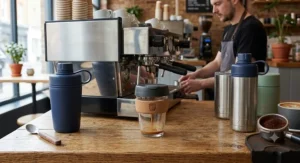
Ask baristas which reusable cup they’d rather see slide across the counter and the answer isn’t always the brand with the biggest marketing budget. KeepCup’s barista-standard sizing genuinely does make it the fastest cup to serve — staff instantly know how much milk and espresso to pour without asking, because the sizes were designed to match café equipment from day one. That’s a real operational advantage in a busy morning rush, and it’s the single biggest reason KeepCup earned “barista favourite” status long before rivals existed.
But the HuskeeCup has quietly built its own loyal following among independent roasters and speciality cafés, many of which now stock and refill HuskeeCups directly, treating them almost as an in-house reusable system rather than a customer’s personal item. Chilly’s cups and frank green cups, while hugely popular with consumers, are less consistently recognised at the counter simply because their proportions vary more between models, occasionally leading to a quick “how full do you want this?” that a KeepCup rarely triggers. If speed and zero-friction service matter to you, KeepCup and HuskeeCup remain the two most reliably barista-friendly shapes on the UK high street.
✨ Ready to actually use a reusable cup instead of leaving it in a drawer? Check current pricing on the cups above and match one to how you really drink your coffee.
Best Reusable Coffee Cup vs KeepCup: How to Choose the Right One For You
If you’re still torn between sticking with KeepCup or trying one of the alternatives above, work through this checklist in order — each step narrows the field further, and by the end you’ll usually have a clear winner.
- Decide if you need insulation. If you finish your coffee within twenty minutes, skip insulated cups entirely and save your money — KeepCup, Ecoffee Cup, HuskeeCup and Stojo will all serve you equally well on temperature.
- Weigh portability against durability. Commuters who forget cups at home should lean toward the collapsible Stojo; anyone who leaves a cup on a desk all day is better served by KeepCup’s rigid, barista-standard shapes.
- Pick your material comfort zone. Glass (KeepCup Brew Cork) gives the cleanest taste, bamboo (Ecoffee Cup) and coffee husk (HuskeeCup) suit anyone avoiding plastic, and steel with ceramic lining (frank green) suits anyone prioritising heat retention above all else.
- Check your budget band. Under £15 covers KeepCup Original, Ecoffee Cup, HuskeeCup and Stojo comfortably; £20 upward is where KeepCup Brew Cork and frank green sit.
- Consider the sustainability story that matters to you. Recycled-content buyers should look at Circular & Co.; byproduct-material buyers should look at HuskeeCup or Ecoffee Cup; longevity-first buyers should stick with KeepCup.
- Test the lid mechanism before committing, if you can. Push-button (frank green, Circular & Co.), plug lid (KeepCup) and non-drip silicone (Ecoffee Cup) all behave differently in a moving bag — try one in-store if a retailer stocks it.
- Match the size to your actual drink, not your aspiration. A 16oz “large” cup you never fill defeats the purpose; buy the size you order most often, not the one that looks most impressive.
| Comparison Factor | KeepCup | Best Alternative |
|---|---|---|
| Fastest at the till | KeepCup Original | HuskeeCup |
| Best insulation | Not offered | frank green Ceramic Reusable Cup |
| Lowest price | KeepCup Original (from £12) | Ecoffee Cup (from £10) |
| Most portable | Not designed for this | Stojo Collapsible Cup |
| Strongest recycled-content story | Not applicable | Circular & Co. Cup |
Reading across that table, the honest conclusion is that KeepCup wins outright on speed of service and price floor, but it doesn’t try to compete on insulation or portability at all — those categories belong entirely to frank green and Stojo respectively. Rather than one cup beating all the others, each rival earns its place by solving a specific problem KeepCup was never designed to solve.
Practical Usage Guide: Getting the Most From Your Reusable Cup
Buying the right cup is only half the job; using it properly is what actually gets you your money back. Rinse any new cup thoroughly before first use — bamboo and coffee husk composites in particular can carry a faint manufacturing smell for the first wash or two, which disappears quickly with normal use. For the first month, keep the cup somewhere genuinely visible rather than in a bag pocket you won’t see — on top of your keys, clipped to a bag strap, or by the front door — since forgetting it at home in week one is the single biggest reason reusable cups end up abandoned.
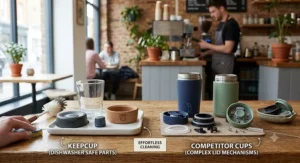
Lids are the part most likely to fail first, regardless of brand, so get into a weekly habit of removing silicone seals and gaskets (KeepCup’s plug, Ecoffee Cup’s resealable lid, HuskeeCup’s universal lid) and giving them a separate hand wash, since dishwasher detergent residue can build up in the small grooves and cause a slow leak. Insulated cups like the Circular & Co. Cup and frank green Ceramic Reusable Cup should never go in with boiling water straight from the kettle without a moment to cool slightly first — repeated extreme temperature shock can shorten the life of any double-wall seal over a few years. And if you’re using your cup at a coffee shop discount scheme, always hand it over before your order is rung through, not after — most tills apply the reusable-cup discount at the point of sale, not as a retrospective refund.
Real-World Scenarios: Which Cup Suits Your Coffee Habit?
Picture three fairly ordinary coffee drinkers. First, a graduate trainee doing a 45-minute train commute into the city every morning, who wants their oat flat white still warm when they reach their desk. For them, the insulation of the frank green Ceramic Reusable Cup or the Circular & Co. Cup genuinely earns its place — the extra spend directly buys back warmth that a KeepCup simply can’t hold onto over that length of journey.
Second, a university student who walks eight minutes to lectures and grabs coffee twice a day between classes, always on a tight budget. Here the maths points firmly at the KeepCup Original or Ecoffee Cup — both are cheap enough to replace without guilt if lost, light enough to live permanently in a rucksack side pocket, and neither wastes money on insulation the student will finish their coffee too fast to need.
Third, a freelancer who works from different cafés most days and genuinely can’t remember to bring anything anywhere. For them, the Stojo Collapsible Cup solves the actual problem — not temperature, not sustainability credentials, just the simple fact that a cup which lives permanently flat in a laptop bag is a cup that’s actually there when needed. Matching the cup to the person, not the marketing, is what turns a one-off purchase into a genuine daily habit.
Common Mistakes When Buying a Reusable Coffee Cup
The single biggest mistake is buying based on Instagram appeal rather than your actual coffee habit — a striking colourway on a frank green cup won’t matter if its bulk means it never fits your bag’s side pocket, and it ends up living in a drawer instead. A close second is ignoring lid mechanism entirely; buyers who commute by bike or run for buses need a genuinely leakproof, spill-tested lid, not just a “splashproof” one, and the difference between those two words matters more than most people realise until coffee ends up on a laptop.
Underestimating size is another recurring pattern — buyers who order a large latte at home routinely under-buy an 8oz cup because it looked neat in a photo, then find themselves half-filling it or splitting orders across two cups. And a genuinely common misstep is assuming discount schemes are universal: not every café offers a bring-your-own-cup discount, and even where they do, the rate varies wildly between a token 10p and a meaningful 50p, which changes the payback maths on any cup you buy. It’s worth noting that MPs specifically flagged that coffee shop discounts, on their own, have proven less effective at driving reuse than direct charges on disposables would be — a policy debate that’s still ongoing in the UK. You can read the BBC’s coverage of a City of London coffee cup recycling scheme for more context on how councils and retailers are trying to tackle the wider disposable cup problem.
Long-Term Cost & Maintenance: Is a Reusable Cup Really Worth It?
The maths on a reusable cup is genuinely simple once you run it. Say you buy three coffees a week and your usual café offers a 25p bring-your-own-cup discount — that’s £39 a year in savings, which comfortably covers the cost of any single cup on this list within its first twelve months, KeepCup or otherwise. Push that to a daily coffee habit and the same 25p discount returns closer to £65 a year, meaning even the priciest cup here, the frank green Ceramic Reusable Cup, pays for itself well inside year one.
Maintenance costs are where cups start to differ more meaningfully over a multi-year timeline. KeepCup’s individually replaceable parts system means a cracked lid or worn band costs a few pounds to replace rather than forcing a whole new cup purchase — a genuine long-term saving that’s easy to overlook at the point of sale. Insulated cups like the Circular & Co. Cup and frank green generally need an occasional replacement seal (often supplied free or cheaply by the brand) to maintain leakproof performance, which is a small but real ongoing cost that uninsulated cups simply don’t have. Total cost of ownership, then, tends to favour KeepCup and HuskeeCup over a five-year horizon purely because there’s less that can wear out — while insulated cups justify their higher running cost only if you’re genuinely using the insulation.
Safety, Materials & UK Regulations Guide
All seven cups in this comparison are BPA-free, which matters because bisphenol A was historically used to harden certain plastics and has faced growing regulatory scrutiny over the years for potential hormone-disrupting effects at high exposure levels. UK food contact material rules require any product intended to touch food or drink — including every cup on this list — to be manufactured from materials that won’t leach harmful substances into your coffee under normal use, and reputable brands publish this compliance information on request.
Disposal habits matter here too, and it’s worth understanding why single-use cups became such a policy flashpoint in the first place. Local waste authorities have been explicit about the scale of the problem: a government study put the UK’s annual disposable coffee cup use at around five billion, which works out to more than 73 cups thrown away per person, every year. That context is exactly why reusable cups matter as a category, regardless of which brand you eventually choose — every one of the seven cups above, used consistently, meaningfully dents that figure for one person. For further detail on how disposable cups are handled (and mishandled) in UK recycling systems, the North London Waste Authority’s explainer on coffee cup disposal is a genuinely useful primer, and WRAP’s ongoing work on finding new uses for single-use coffee cups shows what happens to the small fraction of cups that do get recycled.
Practically, that means: dishwasher-safe parts should be run separately from anything sharp that could nick silicone seals, glass cups (KeepCup Brew Cork) should never go from freezer-cold to boiling-hot in one step, and any cup showing cracks in its main body — regardless of brand — should be retired rather than pushed past its safe working life.
FAQ
❓ Is KeepCup actually better than its competitors?
❓ Which reusable coffee cup keeps drinks hottest for longest?
❓ Do coffee shops actually give discounts for reusable cups?
❓ Is a bamboo fibre cup like Ecoffee Cup actually eco-friendly?
❓ How long do reusable coffee cups actually last?
Conclusion
So, KeepCup vs competitors — where does that leave you? The honest answer is that KeepCup hasn’t been dethroned so much as it’s been joined. It still does the fastest, cheapest, most barista-friendly version of “reusable cup” better than almost anyone else, and for a huge number of coffee drinkers that’s genuinely all that matters. But the field around it has grown up: frank green solved the insulation problem KeepCup never tackled, Circular & Co. built an actual closed recycling loop into its material, HuskeeCup turned an industry byproduct into something café staff actively want behind the counter, and Stojo solved the unglamorous but very real problem of simply remembering to bring a cup at all.
The best move isn’t picking a winner from this list — it’s being honest about which specific problem you’re trying to solve. If it’s speed and price, stay with KeepCup. If it’s a warm drink two hours from now, go insulated. If it’s simply having a cup with you at all, go collapsible. Whichever you land on, the biggest environmental and financial win here isn’t the brand on the side — it’s actually using the thing daily instead of leaving it in a drawer.
Recommended for You
- KeepCup Review 2026: Is It Worth It? 7 Models Ranked
- Travel Mug With Built-In Infuser: 7 Best Picks for 2026
- Best Travel Mug for Tea in 2026: 7 Picks That Actually Work
Disclaimer: This article contains affiliate links. As an Amazon Associate, I earn from qualifying purchases. If you purchase products through these links, we may earn a small commission at no additional cost to you.
✨ Found this helpful? Share it with your friends! 💬🤗
